Thai foot massage technique, foot massage training, reflexology safety
Thai Foot Massage Technique: Step-by-Step Training Guide
Learn Thai foot massage technique, foot stick safety, sequence design, pressure rules, reflexology overlap, and professional training notes.
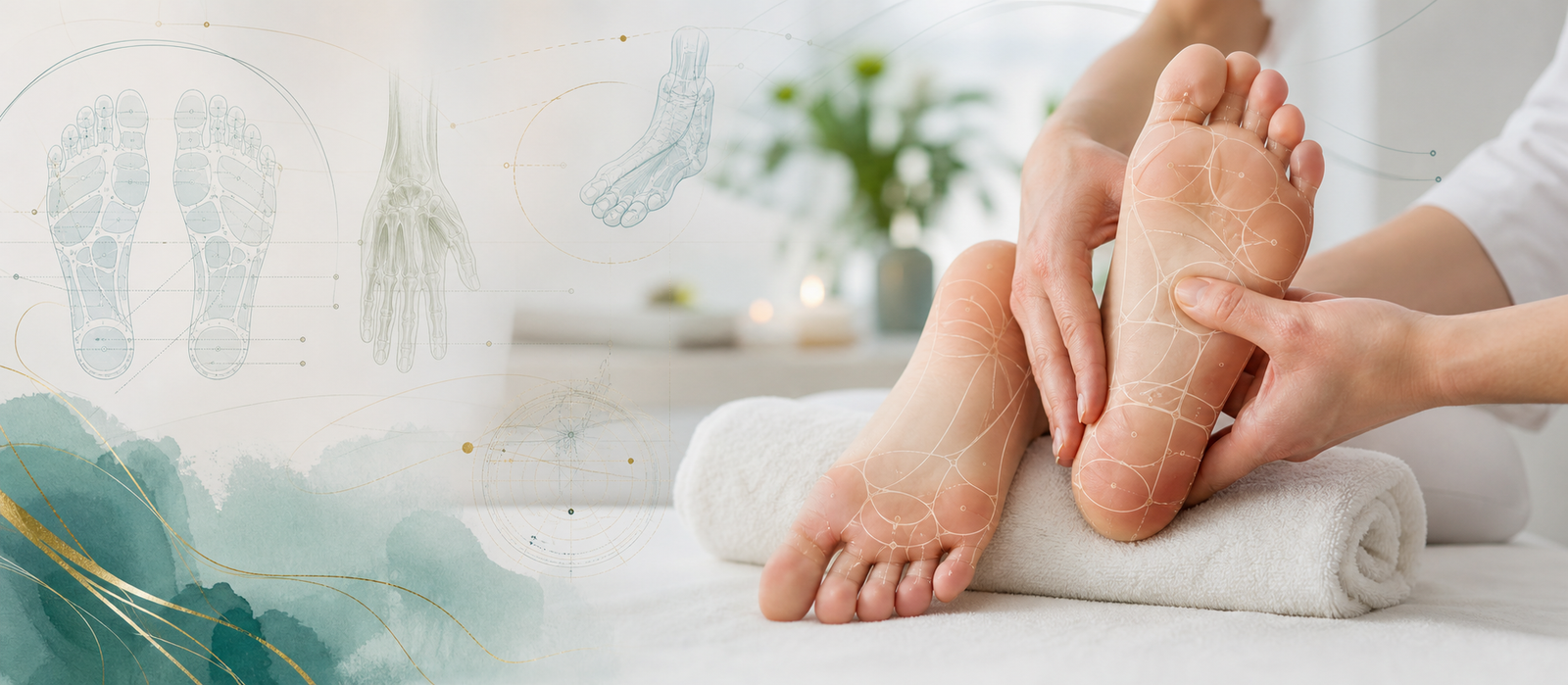
Clinical Photo
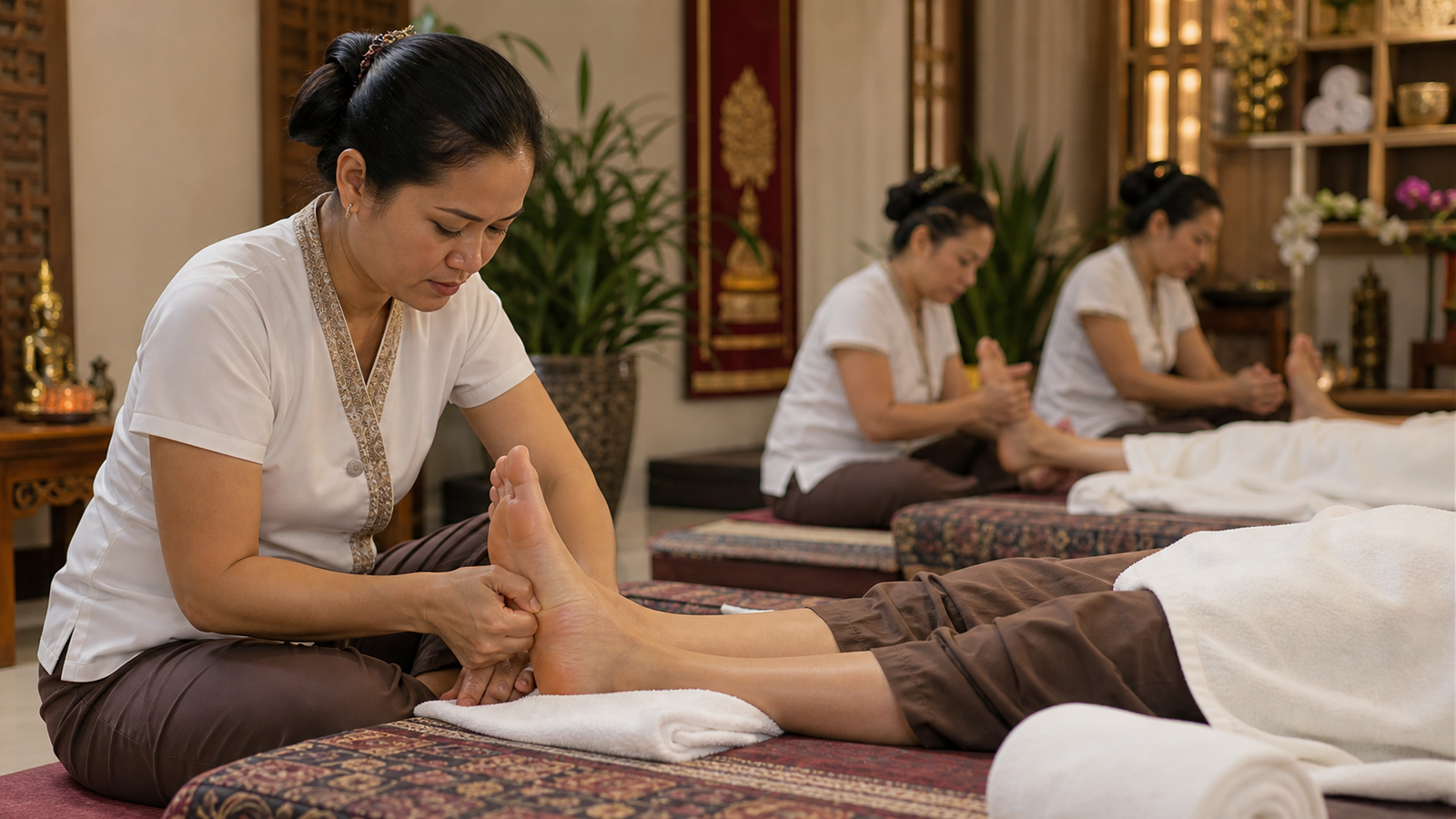
Premium Infographic
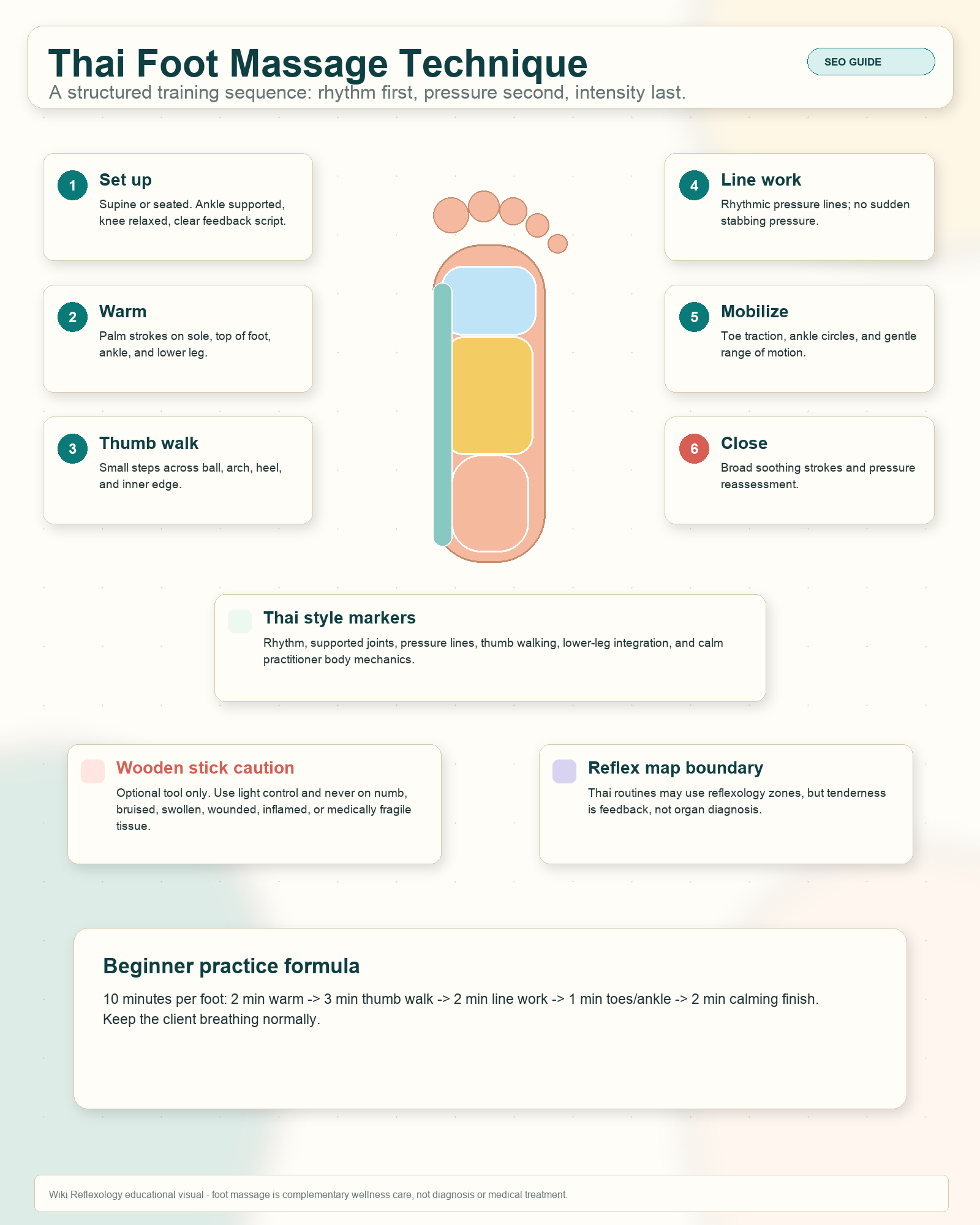
Thai Foot Massage Technique: What to Know
Readers often want a training sequence rather than a theory page: what to do first, how to use the stick, and how to avoid hurting the client. This article teaches the technique as a professional routine with clear pressure, pacing, and contraindication rules.
Thai foot massage is a structured foot and lower-leg session that blends rhythmic massage, assisted movement, reflexology influence, and sometimes a wooden stick. The practical goal is to understand where the method may fit, what it cannot prove, and when pressure on the feet should be avoided.
For thai foot massage technique, this guide uses traditional reflexology language where it helps explain the practice, then checks that language against current research and ordinary foot-care safety. It describes realistic uses, avoids cure claims, and places consent, screening, and referral before technique.
Table of Contents
What This Topic Really Means
The useful starting point is to separate the reader's goal from the claims sometimes attached to reflexology. For this topic, the practical use cases are spa training, Thai massage schools, foot massage menus, home practice with caution, and reflexology crossover learning. Those goals are reasonable when the language stays focused on comfort, relaxation, education, and session design.
The mistake is to jump from a traditional map to a medical conclusion. Thai foot massage may borrow reflexology language, but the session is also about rhythm, warmth, leverage, and whole-foot comfort. That map can help a practitioner create a consistent sequence, but it cannot diagnose disease, prove organ dysfunction, or replace an examination.
Two questions keep thai foot massage technique useful and honest: how can a careful practitioner or self-care reader use the method, and what boundary prevents a traditional idea from becoming a medical claim? The first question guides the session; the second protects the reader.
Method, Maps, and Technique
The core techniques for this page are warm towel setup, oil-based gliding, thumb pressure, wooden stick tracing, toe traction, ankle mobilization, and lower-leg closing strokes. They should be taught from broad to specific. Broad contact warms the foot and gives the client time to settle. Focused pressure comes later, only after the reader understands the goal, the tissue response, and the pressure scale.
For thai foot massage technique, a useful pressure scale runs from 1 to 10. A 1 to 3 feels light and calming, a 4 to 6 is a moderate working range for many healthy adults, and anything above that should be treated with caution. More pressure is not more professional; it is only more force.
A training guide should teach therapist body mechanics, hand protection, towel hygiene, pressure checks, and when to avoid tools. This is especially important online because a reader may copy the routine at home without a teacher watching their body mechanics, pressure, or foot condition.
Benefits and Best Uses
The best uses are practical rather than dramatic. A reader can use thai foot massage technique to plan a relaxation session, understand a professional service, choose the next page in the cluster, or build a safer home routine. The benefit is the combination of touch, attention, pacing, and clear boundaries.
For readers exploring thai foot massage technique, the immediate value is often a better decision rather than a medical outcome. They learn when a relaxation session is enough, when a map adds structure, when symptoms require referral, and when self-care should stay gentle.
For home use, skip the stick until trained and use broad thumb pressure, lotion, and slow ankle movement instead. This simple framing respects the reader's real need without overstating what the evidence can support.
Evidence and Limits
Evidence for thai foot massage technique needs cautious interpretation. NCCIH describes reflexology as pressure applied to points on the feet or hands and notes that claims about healing specific body parts have not been proven. That distinction shapes how the findings below are interpreted.
Its value is best described as practice-based relaxation and comfort, not a proven treatment for internal conditions. The right editorial move is not to erase tradition, but to label it accurately. Reflexology maps are traditional therapeutic maps. They are not anatomical scans, lab tests, or diagnostic images.
Avoid promising that Thai foot massage removes toxins, cures illness, or forces blocked energy out of painful points. Readers can still value the practice when the page explains touch, relaxation, client experience, and safety with precision.
Reviewed July 16, 2026
2024 Thai Massage Research: Immediate Effects, Not a Cure
A small 2024 randomized trial assigned 26 healthy older adults to 15 minutes of Thai foot massage or bed rest. The massage group showed immediate within-group changes in a stress index, heart-rate-variability measures, and one renal blood-flow measure, with no reported side effects. Between-group results were more limited, and the authors called for study in a larger population.
Another 2024 randomized trial studied traditional Thai massage after calf-fatiguing exercise in 54 healthy young adults and reported faster short-term recovery than rest. It was calf-focused traditional Thai massage, not a complete Thai foot reflexology protocol. Both studies are relevant to session design, but neither supports claims that Thai foot massage treats kidney disease, vascular disease, or chronic fatigue.
The practical lesson is to preserve the features actually studied: a defined duration, moderate pressure, a reproducible sequence, and measurable before-and-after outcomes. Training should also distinguish sole lines, local muscle work, stretching, and traditional point systems so that students understand which technique they are applying.
What to do with this update
- Use moderate, feedback-led pressure and avoid turning a traditional sequence into a pain test.
- Document session length, areas worked, and immediate comfort or mobility rather than making organ claims.
- Screen older adults for fragile skin, neuropathy, vascular risk, balance concerns, and medication-related bruising.
Safety, Contraindications, and Referral
Tool use is the major risk. A stick can concentrate force quickly and should not be used over numbness, fragile skin, wounds, or severe tenderness. This safety section should be visible in the article, not hidden in a disclaimer footer.
Before using thai foot massage technique, avoid pressure over open wounds, ulcers, burns, active infection, suspected fracture, acute injury, unexplained severe pain, or sudden swelling. Use extra caution with diabetes, neuropathy, vascular disease, fragile skin, anticoagulant use, immune suppression, cancer treatment, pregnancy, and older adults.
Red flags when considering thai foot massage technique include fever, spreading redness, chest symptoms, shortness of breath, new numbness, weakness, loss of balance, calf pain, one-sided swelling, non-healing wounds, or symptoms that are severe, progressive, or unexplained. These are referral signs, not reflexology challenges.
Practical Routine or Session Structure
Start a thai foot massage technique session with intake. Ask about the goal, pressure preference, injuries, current symptoms, medical risk factors, and areas to avoid. In a professional setting, this can be brief but it should never disappear.
Before applying pressure in a thai foot massage technique session, inspect the feet or hands for wounds, swelling, skin or color change, temperature difference, bruising, callus, fungal signs, and visible discomfort. The safest technique is the one adapted to what is actually in front of you.
For this specific topic, a practical sequence is: warm the area, use warm towel setup, add oil-based gliding, work slowly through the most relevant zones, ask for feedback, then close with broad calming contact. Keep the session short enough that the reader finishes relaxed rather than sore.
After thai foot massage technique, keep aftercare modest: drink water if desired, notice soreness, avoid aggressive self-treatment, inspect the feet if there is medical risk, and seek care if unusual symptoms appear. A reaction does not prove that toxins are leaving the body.
Recommended Reading Path
This page should link to the how-to reflexology page for beginner pressure skills and to the foot massage benefits page for broader context.
Frequently Asked Questions
Is Thai foot massage the same as reflexology?
No. It can include reflexology influence, but it is a broader Thai-style foot and lower-leg routine.
Do I need a wooden stick?
Not for beginners. Hands are safer while learning pressure, tissue response, and contraindications.
How hard should the stick pressure be?
Light to moderate. The client should breathe normally and never feel sharp, electric, or bruising pain.
Can Thai foot massage be done with oil?
Yes. Many routines use lotion or oil for glide, then reduce glide for focused pressure.
Who should avoid Thai foot tools?
People with neuropathy, wounds, vascular disease, fragile skin, acute injury, or unexplained pain need caution or referral.
Scientific, Medical, Therapeutic, and Book References
Online references
- NCCIH: Massage Therapy: What You Need To Know. General massage safety, evidence, and scope context.
- NCCIH: Reflexology. Evidence overview and safety framing for reflexology.
- NCBI Bookshelf: Foot Fascia Anatomy. Anatomy of plantar fascia, compartments, blood supply, and innervation.
- NCBI Bookshelf: Foot Nerves. Peripheral nerve anatomy relevant to foot sensation and referral.
- Immediate Effects of Thai Foot Massage in Older Adults: Randomized Trial. A small 2024 trial measured immediate stress, heart-rate variability, and renal blood-flow outcomes after a 15-minute session.
- Traditional Thai Massage and Calf-Muscle Fatigue Recovery: Randomized Trial. A 2024 trial studied short-term recovery after exercise-related calf fatigue in healthy adults.
Book references
- Ingham, E. Stories the Feet Can Tell Thru Reflexology. Historical reflexology reference.
- Byers, D. Better Health with Foot Reflexology. International Institute of Reflexology.
- Dougans, I. The Complete Illustrated Guide to Reflexology. Reflex map and practice reference.
- Marquardt, H. Reflexotherapy of the Feet. Professional reflex-zone therapy reference.