Foot massage benefits, pressure points, techniques, and safety
Foot Massage Benefits: Techniques, Reflexology Differences, and What to Expect
Learn realistic foot massage benefits, techniques, pressure-point differences, reflexology overlap, session expectations, and safety rules.
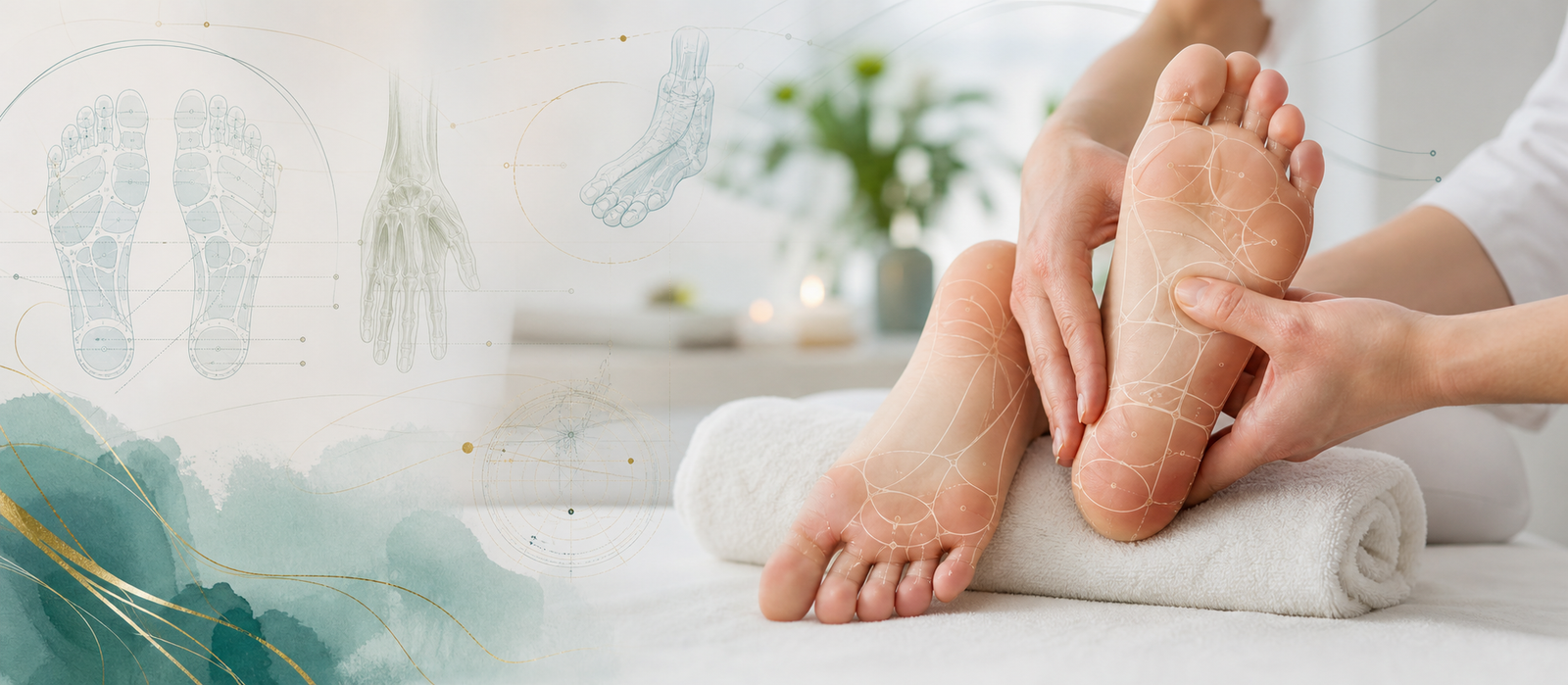
Clinical Photo
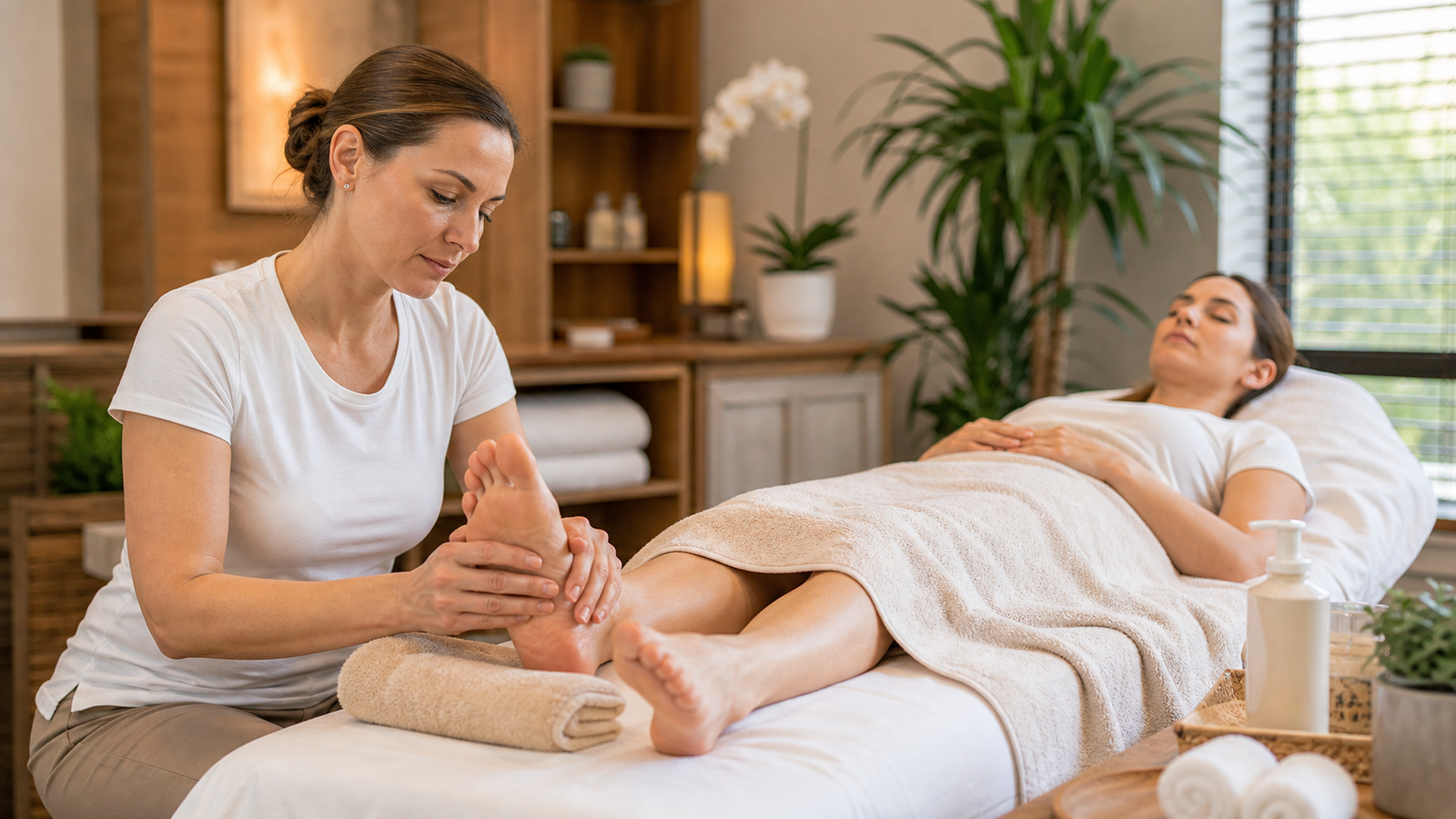
Premium Infographic
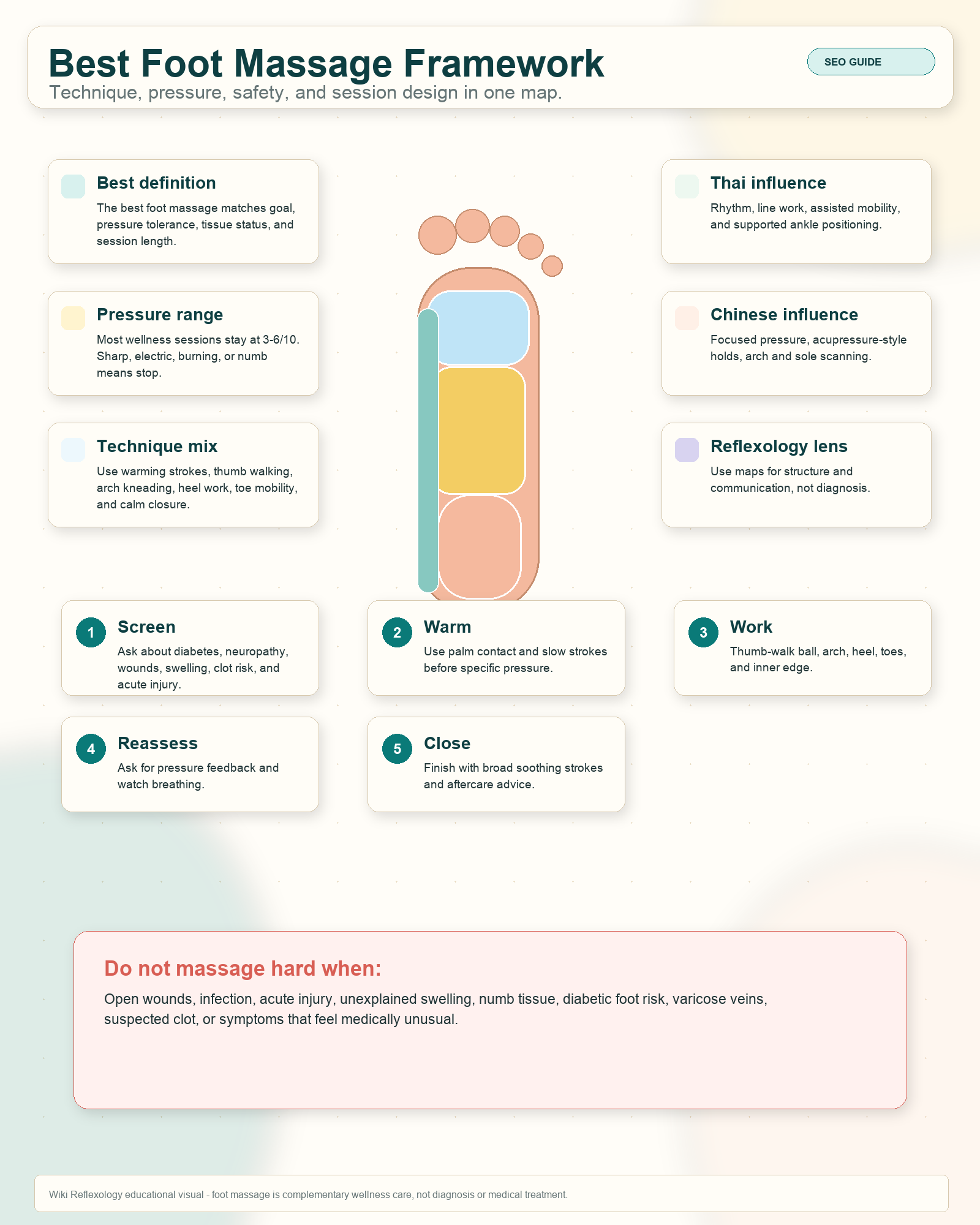
Foot Massage Benefits: What to Know
Readers want to know whether foot massage helps, how it differs from reflexology, and what a safe professional or home session should include. This article gives practical benefit language without turning a relaxing service into an unsupported medical treatment.
Foot massage is the deliberate use of touch, kneading, compression, gliding, stretching, and pressure on the feet and ankles. The practical goal is to understand where the method may fit, what it cannot prove, and when pressure on the feet should be avoided.
For foot massage benefits, this guide uses traditional reflexology language where it helps explain the practice, then checks that language against current research and ordinary foot-care safety. It describes realistic uses, avoids cure claims, and places consent, screening, and referral before technique.
Table of Contents
What This Topic Really Means
The useful starting point is to separate the reader's goal from the claims sometimes attached to reflexology. For this topic, the practical use cases are relaxation, tired feet, travel recovery, spa experiences, and self-care at night. Those goals are reasonable when the language stays focused on comfort, relaxation, education, and session design.
The mistake is to jump from a traditional map to a medical conclusion. A foot massage may include reflexology-style zones, but it can also remain purely local and comfort-focused. That map can help a practitioner create a consistent sequence, but it cannot diagnose disease, prove organ dysfunction, or replace an examination.
Two questions keep foot massage benefits useful and honest: how can a careful practitioner or self-care reader use the method, and what boundary prevents a traditional idea from becoming a medical claim? The first question guides the session; the second protects the reader.
Method, Maps, and Technique
The core techniques for this page are broad palm strokes, arch kneading, heel compression, toe mobilization, ankle circles, and light calf transitions. They should be taught from broad to specific. Broad contact warms the foot and gives the client time to settle. Focused pressure comes later, only after the reader understands the goal, the tissue response, and the pressure scale.
For foot massage benefits, a useful pressure scale runs from 1 to 10. A 1 to 3 feels light and calming, a 4 to 6 is a moderate working range for many healthy adults, and anything above that should be treated with caution. More pressure is not more professional; it is only more force.
A strong session explanation includes intake, hygiene, pressure preference, technique sequence, and aftercare. This is especially important online because a reader may copy the routine at home without a teacher watching their body mechanics, pressure, or foot condition.
Benefits and Best Uses
The best uses are practical rather than dramatic. A reader can use foot massage benefits to plan a relaxation session, understand a professional service, choose the next page in the cluster, or build a safer home routine. The benefit is the combination of touch, attention, pacing, and clear boundaries.
For readers exploring foot massage benefits, the immediate value is often a better decision rather than a medical outcome. They learn when a relaxation session is enough, when a map adds structure, when symptoms require referral, and when self-care should stay gentle.
At home, foot massage can be a simple routine with lotion, warm hands, broad contact, and gentle pressure rather than deep digging. This simple framing respects the reader's real need without overstating what the evidence can support.
Evidence and Limits
Evidence for foot massage benefits needs cautious interpretation. NCCIH describes reflexology as pressure applied to points on the feet or hands and notes that claims about healing specific body parts have not been proven. That distinction shapes how the findings below are interpreted.
Massage therapy has a low risk profile when performed appropriately, but vigorous pressure can create problems in vulnerable clients. The right editorial move is not to erase tradition, but to label it accurately. Reflexology maps are traditional therapeutic maps. They are not anatomical scans, lab tests, or diagnostic images.
Avoid claiming that a massage removes toxins, cures disease, or proves organ imbalance from a tender sole. Readers can still value the practice when the page explains touch, relaxation, client experience, and safety with precision.
Reviewed July 16, 2026
What the Latest Massage Evidence Really Supports
A 2025 systematic review and meta-analysis pooled 36 randomized trials of massage therapy in people with cancer. It reported improvements in pain, anxiety, and quality of life after treatment, but rated the certainty of every outcome as very low because many studies had unclear or high risk of bias. It also examined massage broadly, not ordinary foot massage in healthy adults.
This is a useful example of both promise and restraint. Massage can be part of supportive care and may change how a person feels in the short term, yet the size of an effect in a medically supervised cancer study cannot be copied into a spa menu or a home foot routine. The population, technique, practitioner, timing, and comparison all matter.
The most dependable foot-massage claims remain local comfort, relaxation, a pleasant wind-down ritual, and temporary relief of tired-feeling feet. Readers should be cautious when marketing language jumps from those experiences to immune effects, detoxification, improved organ function, or guaranteed pain control.
What to do with this update
- Choose broad kneading and comfortable compression before deep focal pressure.
- Judge benefit by comfort and function after the session, not by how painful the session felt.
- Adapt or avoid massage when medical treatment, skin fragility, neuropathy, swelling, or clot risk changes safety.
Safety, Contraindications, and Referral
Foot massage needs caution with diabetes, neuropathy, wounds, swelling, blood-clot risk, fragile skin, and acute injury. This safety section should be visible in the article, not hidden in a disclaimer footer.
Before using foot massage benefits, avoid pressure over open wounds, ulcers, burns, active infection, suspected fracture, acute injury, unexplained severe pain, or sudden swelling. Use extra caution with diabetes, neuropathy, vascular disease, fragile skin, anticoagulant use, immune suppression, cancer treatment, pregnancy, and older adults.
Red flags when considering foot massage benefits include fever, spreading redness, chest symptoms, shortness of breath, new numbness, weakness, loss of balance, calf pain, one-sided swelling, non-healing wounds, or symptoms that are severe, progressive, or unexplained. These are referral signs, not reflexology challenges.
Practical Routine or Session Structure
Start a foot massage benefits session with intake. Ask about the goal, pressure preference, injuries, current symptoms, medical risk factors, and areas to avoid. In a professional setting, this can be brief but it should never disappear.
Before applying pressure in a foot massage benefits session, inspect the feet or hands for wounds, swelling, skin or color change, temperature difference, bruising, callus, fungal signs, and visible discomfort. The safest technique is the one adapted to what is actually in front of you.
For this specific topic, a practical sequence is: warm the area, use broad palm strokes, add arch kneading, work slowly through the most relevant zones, ask for feedback, then close with broad calming contact. Keep the session short enough that the reader finishes relaxed rather than sore.
After foot massage benefits, keep aftercare modest: drink water if desired, notice soreness, avoid aggressive self-treatment, inspect the feet if there is medical risk, and seek care if unusual symptoms appear. A reaction does not prove that toxins are leaving the body.
Recommended Reading Path
This page should introduce readers to the reflexology-vs-foot-massage comparison and then move them toward the pillar if they want map-led work.
Frequently Asked Questions
What are the main foot massage benefits?
The most realistic benefits are relaxation, local comfort, reduced foot tension, and a calmer self-care routine.
Is foot massage reflexology?
Not always. Reflexology is map-led; foot massage can be local, spa-based, Thai-style, or general relaxation work.
Can foot massage help sleep?
It may help some people wind down, but it should not be framed as a standalone insomnia treatment.
Is deep pressure better?
No. Pressure should match the person, tissue, and health status. Deep work is not safer or more effective by default.
When should I avoid foot massage?
Avoid massage over wounds, infection, acute injury, severe swelling, suspected clot, or reduced sensation without professional guidance.
Scientific, Medical, Therapeutic, and Book References
Online references
- NCCIH: Massage Therapy: What You Need To Know. General massage safety, evidence, and scope context.
- NCCIH: Reflexology. Evidence overview and safety framing for reflexology.
- CDC: Tips for Healthy Feet. Foot-care precautions, daily inspection, and diabetes-related foot safety.
- NCBI Bookshelf: Foot Fascia Anatomy. Anatomy of plantar fascia, compartments, blood supply, and innervation.
- Foot Reflexology for Depression, Anxiety, and Sleep: Meta-analysis. Systematic review and meta-analysis of randomized trials.
- Massage Therapy for Cancer Pain, Quality of Life, and Anxiety: Meta-analysis. A 2025 review found possible benefits across 36 trials, while rating the certainty of all outcomes very low.
Book references
- Ingham, E. Stories the Feet Can Tell Thru Reflexology. Historical reflexology reference.
- Byers, D. Better Health with Foot Reflexology. International Institute of Reflexology.
- Dougans, I. The Complete Illustrated Guide to Reflexology. Reflex map and practice reference.
- Marquardt, H. Reflexotherapy of the Feet. Professional reflex-zone therapy reference.