Back pain reflexology self-care and safety
Reflexology for Back Pain: Foot Zones, Hand Points, and Safety Limits
Learn reflexology for back pain with foot zones, hand alternatives, gentle pressure rules, evidence limits, contraindications, and red flags.
Reflexology For Back Pain: What to Know
The reader is often in discomfort and wants a practical routine, which makes careful red-flag language especially important. This guide offers gentle supportive steps and explains when back pain belongs with a clinician instead of a foot point.
Reflexology for back pain uses traditional spine-line and heel-zone work to support comfort while staying outside diagnosis and treatment claims. The practical goal is to understand where the method may fit, what it cannot prove, and when pressure on the feet should be avoided.
For reflexology for back pain, this guide uses traditional reflexology language where it helps explain the practice, then checks that language against current research and ordinary foot-care safety. It describes realistic uses, avoids cure claims, and places consent, screening, and referral before technique.
Table of Contents
What This Topic Really Means
The useful starting point is to separate the reader's goal from the claims sometimes attached to reflexology. For this topic, the practical use cases are general back tension, relaxation after sitting, foot-based comfort, hand-reflexology alternatives, and practitioner session planning. Those goals are reasonable when the language stays focused on comfort, relaxation, education, and session design.
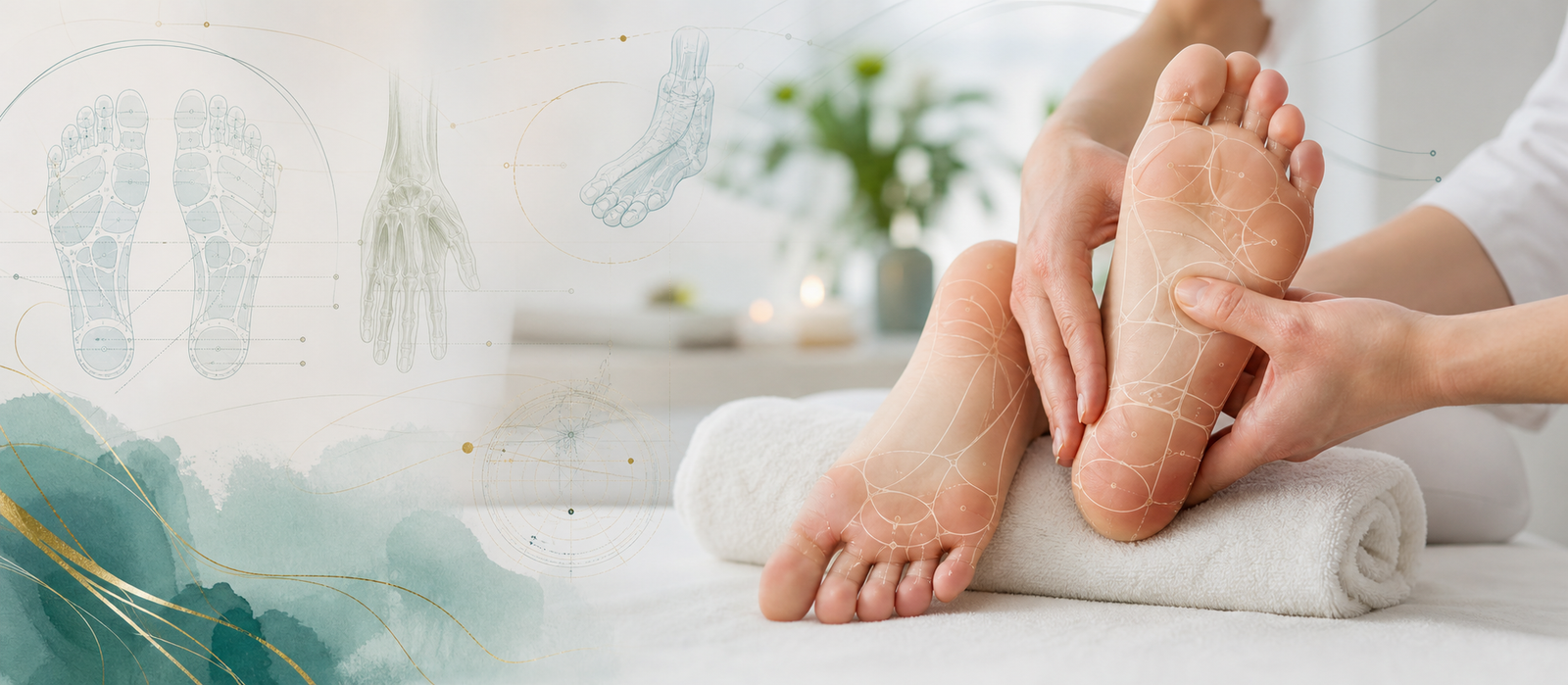
The mistake is to jump from a traditional map to a medical conclusion. Traditional charts often place the spine along the inner edge of the foot and lower-back or hip areas near the heel. That map can help a practitioner create a consistent sequence, but it cannot diagnose disease, prove organ dysfunction, or replace an examination.
Two questions keep reflexology for back pain useful and honest: how can a careful practitioner or self-care reader use the method, and what boundary prevents a traditional idea from becoming a medical claim? The first question guides the session; the second protects the reader.
Method, Maps, and Technique
The core techniques for this page are medial edge thumb walking, heel compression, arch softening, hand spine-line work, and slow breathing holds. They should be taught from broad to specific. Broad contact warms the foot and gives the client time to settle. Focused pressure comes later, only after the reader understands the goal, the tissue response, and the pressure scale.
For reflexology for back pain, a useful pressure scale runs from 1 to 10. A 1 to 3 feels light and calming, a 4 to 6 is a moderate working range for many healthy adults, and anything above that should be treated with caution. More pressure is not more professional; it is only more force.
A professional article should include symptom screening, referral red flags, gentle positioning, and an option to use hands if feet are not appropriate. This is especially important online because a reader may copy the routine at home without a teacher watching their body mechanics, pressure, or foot condition.
Benefits and Best Uses
The best uses are practical rather than dramatic. A reader can use reflexology for back pain to plan a relaxation session, understand a professional service, choose the next page in the cluster, or build a safer home routine. The benefit is the combination of touch, attention, pacing, and clear boundaries.
For readers exploring reflexology for back pain, the immediate value is often a better decision rather than a medical outcome. They learn when a relaxation session is enough, when a map adds structure, when symptoms require referral, and when self-care should stay gentle.
For self-care, use broad pressure along the inner foot edge and heel, then stop before soreness builds. This simple framing respects the reader's real need without overstating what the evidence can support.
Evidence and Limits
Evidence for reflexology for back pain needs cautious interpretation. NCCIH describes reflexology as pressure applied to points on the feet or hands and notes that claims about healing specific body parts have not been proven. That distinction shapes how the findings below are interpreted.
Back pain has many causes. Reflexology may feel supportive, but it should not be presented as correcting discs, nerves, joints, or organs. The right editorial move is not to erase tradition, but to label it accurately. Reflexology maps are traditional therapeutic maps. They are not anatomical scans, lab tests, or diagnostic images.
Avoid saying foot pressure can realign the spine, release a trapped nerve, cure sciatica, or replace imaging or physical therapy. Readers can still value the practice when the page explains touch, relaxation, client experience, and safety with precision.
Reviewed July 16, 2026
Back-Pain Update: Reflexology Belongs in a Broader Plan
A 2024 randomized trial in 42 ICU nurses reported lower back-pain and fatigue scores after four weekly foot-reflexology sessions, although perceived stress did not change significantly. The study was small and occupation-specific, so it is a useful signal rather than proof that a foot zone treats the structures causing low back pain.
The World Health Organization's guideline for chronic primary low back pain recommends person-centered, integrated care. It considers massage one physical intervention that may be offered in some contexts, alongside education, exercise, selected psychological care, and multicomponent approaches. The guideline does not position reflexology or massage as a stand-alone cure, and it discourages several commonly overused passive treatments.
A reflexology session can support relaxation and symptom coping while the main plan protects movement, sleep, work capacity, and confidence. Pain that follows major trauma or comes with fever, unexplained weight loss, new bladder or bowel problems, saddle numbness, progressive weakness, or severe night pain needs prompt medical assessment.
What to do with this update
- Use pain and function measures before and after a short series instead of judging one session in isolation.
- Keep moving within professional advice and avoid presenting passive foot work as a replacement for rehabilitation.
- Escalate neurological or systemic red flags immediately rather than searching for a stronger spinal reflex point.
Safety, Contraindications, and Referral
Back pain with weakness, numbness, fever, trauma, bladder or bowel changes, cancer history, or severe progressive symptoms needs urgent medical attention. This safety section should be visible in the article, not hidden in a disclaimer footer.
Before using reflexology for back pain, avoid pressure over open wounds, ulcers, burns, active infection, suspected fracture, acute injury, unexplained severe pain, or sudden swelling. Use extra caution with diabetes, neuropathy, vascular disease, fragile skin, anticoagulant use, immune suppression, cancer treatment, pregnancy, and older adults.
Red flags when considering reflexology for back pain include fever, spreading redness, chest symptoms, shortness of breath, new numbness, weakness, loss of balance, calf pain, one-sided swelling, non-healing wounds, or symptoms that are severe, progressive, or unexplained. These are referral signs, not reflexology challenges.
Practical Routine or Session Structure
Start a reflexology for back pain session with intake. Ask about the goal, pressure preference, injuries, current symptoms, medical risk factors, and areas to avoid. In a professional setting, this can be brief but it should never disappear.
Before applying pressure in a reflexology for back pain session, inspect the feet or hands for wounds, swelling, skin or color change, temperature difference, bruising, callus, fungal signs, and visible discomfort. The safest technique is the one adapted to what is actually in front of you.
For this specific topic, a practical sequence is: warm the area, use medial edge thumb walking, add heel compression, work slowly through the most relevant zones, ask for feedback, then close with broad calming contact. Keep the session short enough that the reader finishes relaxed rather than sore.
After reflexology for back pain, keep aftercare modest: drink water if desired, notice soreness, avoid aggressive self-treatment, inspect the feet if there is medical risk, and seek care if unusual symptoms appear. A reaction does not prove that toxins are leaving the body.
Recommended Reading Path
This page should link to the pressure-points guide and the pillar so readers understand both local technique and broader reflexology limits.
Frequently Asked Questions
Can reflexology cure back pain?
No. It may support comfort for some people, but back pain assessment and treatment require appropriate clinical care.
Where is the back zone on the foot?
Many charts place the spine along the inner edge and lower-back or pelvic areas near the heel.
Can I use reflexology for sciatica?
Use caution. True sciatic symptoms, weakness, numbness, or worsening pain should be medically assessed.
What pressure should I use?
Use gentle to moderate pressure and avoid sharp, shooting, electric, or worsening sensations.
When is back pain urgent?
Seek urgent care for trauma, fever, cancer history, neurological changes, bladder or bowel changes, or severe progressive pain.
Scientific, Medical, Therapeutic, and Book References
Online references
- NCCIH: Reflexology. Evidence overview and safety framing for reflexology.
- NCCIH: Chronic Pain and Complementary Health Approaches. Evidence and safety context for complementary care in pain.
- NCBI Bookshelf: Foot Fascia Anatomy. Anatomy of plantar fascia, compartments, blood supply, and innervation.
- NCBI Bookshelf: Foot Nerves. Peripheral nerve anatomy relevant to foot sensation and referral.
- NIDDK: Diabetic Neuropathy. Medical context for reduced sensation, nerve symptoms, and foot risk.
- Foot Reflexology for Stress, Fatigue, and Low Back Pain in ICU Nurses: Randomized Trial. A 2024 trial reported lower back-pain and fatigue scores, but no statistically significant change in perceived stress.
- WHO Guideline for Chronic Primary Low Back Pain. WHO recommends person-centered, integrated care and considers massage one possible component rather than a stand-alone cure.
Book references
- Ingham, E. Stories the Feet Can Tell Thru Reflexology. Historical reflexology reference.
- Byers, D. Better Health with Foot Reflexology. International Institute of Reflexology.
- Dougans, I. The Complete Illustrated Guide to Reflexology. Reflex map and practice reference.
- Marquardt, H. Reflexotherapy of the Feet. Professional reflex-zone therapy reference.