Pregnancy and prenatal safety
Reflexology and Pregnancy: Benefits, Precautions, and Safe Foot Massage Rules
Learn reflexology pregnancy benefits, safe positioning, pressure precautions, high-risk considerations, and when to ask a maternity clinician.
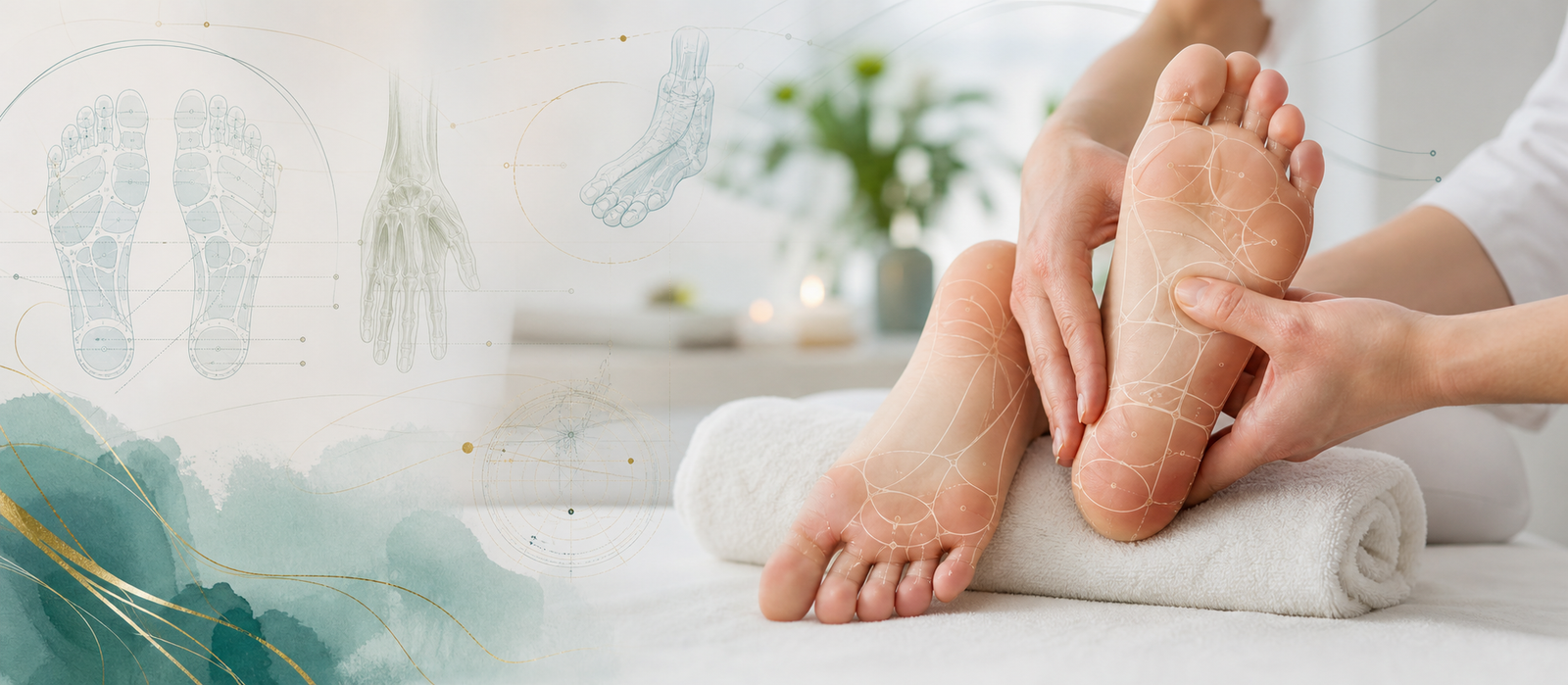
Reflexology Pregnancy: What to Know
Readers may want relief from tired feet, stress, sleep disruption, or late-pregnancy discomfort, but they also worry about whether foot pressure could be risky. This article gives a balanced answer: gentle care may be appropriate for many pregnancies, but high-risk cases require clinician guidance.
Pregnancy reflexology is foot or hand reflexology adapted for a pregnant client with gentler pressure, safe positioning, and stronger screening. The practical goal is to understand where the method may fit, what it cannot prove, and when pressure on the feet should be avoided.
For reflexology pregnancy, this guide uses traditional reflexology language where it helps explain the practice, then checks that language against current research and ordinary foot-care safety. It describes realistic uses, avoids cure claims, and places consent, screening, and referral before technique.
Table of Contents
What This Topic Really Means
The useful starting point is to separate the reader's goal from the claims sometimes attached to reflexology. For this topic, the practical use cases are prenatal relaxation, tired feet, sleep preparation, stress support, and partner foot massage with caution. Those goals are reasonable when the language stays focused on comfort, relaxation, education, and session design.
The mistake is to jump from a traditional map to a medical conclusion. Pregnancy articles should avoid fear-based claims about every ankle point while still respecting professional caution around pressure, positioning, and medical risk. That map can help a practitioner create a consistent sequence, but it cannot diagnose disease, prove organ dysfunction, or replace an examination.
Two questions keep reflexology pregnancy useful and honest: how can a careful practitioner or self-care reader use the method, and what boundary prevents a traditional idea from becoming a medical claim? The first question guides the session; the second protects the reader.
Method, Maps, and Technique
The core techniques for this page are side-lying positioning, supported seated work, light foot massage, gentle thumb walking, hand reflexology alternatives, and slow closing holds. They should be taught from broad to specific. Broad contact warms the foot and gives the client time to settle. Focused pressure comes later, only after the reader understands the goal, the tissue response, and the pressure scale.
For reflexology pregnancy, a useful pressure scale runs from 1 to 10. A 1 to 3 feels light and calming, a 4 to 6 is a moderate working range for many healthy adults, and anything above that should be treated with caution. More pressure is not more professional; it is only more force.
A professional prenatal article should mention consent, positioning, pressure scale, trimester comfort, referral signs, and collaboration with medical care. This is especially important online because a reader may copy the routine at home without a teacher watching their body mechanics, pressure, or foot condition.
Benefits and Best Uses
The best uses are practical rather than dramatic. A reader can use reflexology pregnancy to plan a relaxation session, understand a professional service, choose the next page in the cluster, or build a safer home routine. The benefit is the combination of touch, attention, pacing, and clear boundaries.
For readers exploring reflexology pregnancy, the immediate value is often a better decision rather than a medical outcome. They learn when a relaxation session is enough, when a map adds structure, when symptoms require referral, and when self-care should stay gentle.
At home, pregnant readers should choose light relaxing foot massage, avoid intense pressure, and ask their maternity clinician if symptoms are unusual or pregnancy is high risk. This simple framing respects the reader's real need without overstating what the evidence can support.
Evidence and Limits
Evidence for reflexology pregnancy needs cautious interpretation. NCCIH describes reflexology as pressure applied to points on the feet or hands and notes that claims about healing specific body parts have not been proven. That distinction shapes how the findings below are interpreted.
Research on pregnancy reflexology is developing and should be presented cautiously; comfort support is a safer claim than labor induction or medical treatment. The right editorial move is not to erase tradition, but to label it accurately. Reflexology maps are traditional therapeutic maps. They are not anatomical scans, lab tests, or diagnostic images.
Avoid promising induction, easier labor, fertility effects, hormone balancing, or treatment of pregnancy complications through foot pressure. Readers can still value the practice when the page explains touch, relaxation, client experience, and safety with precision.
Reviewed July 16, 2026
2024-2025 Pregnancy Evidence Update
A 2024 systematic review pooled 13 randomized studies with 1,189 pregnant participants and reported favorable results for anxiety, pain, labor duration, and birth satisfaction. A 2025 meta-analysis of 10 studies and 1,253 participants also reported shorter labor stages and lower active-phase pain for prenatal yoga and reflexology interventions, while some analyses showed substantial heterogeneity.
Those findings are encouraging but do not justify a universal induction protocol. The reviews combine different interventions, timing, pressure methods, maternity settings, and risk profiles. Pooled labor outcomes do not answer whether a particular ankle point starts labor, whether unsupervised deep pressure is safe, or whether results apply to a high-risk pregnancy.
The safest current interpretation is that gentle, professionally adapted reflexology may be considered for comfort in an uncomplicated pregnancy with maternity-team awareness. It remains complementary care. Bleeding, severe headache, visual changes, sudden or one-sided swelling, calf pain, chest symptoms, reduced fetal movement, contractions, ruptured membranes, or clinician restrictions override a massage plan.
What to do with this update
- Confirm pregnancy status, trimester, risk factors, current symptoms, and clinician advice before the session.
- Use supported side-lying or seated positioning and keep pressure comfortable and easy to stop.
- Never advertise reflexology as a guaranteed way to induce labor or treat a pregnancy complication.
Safety, Contraindications, and Referral
High-risk pregnancy, bleeding, preeclampsia concerns, clot risk, severe swelling, calf pain, reduced fetal movement, or medical restrictions require clinician input. This safety section should be visible in the article, not hidden in a disclaimer footer.
Before using reflexology pregnancy, avoid pressure over open wounds, ulcers, burns, active infection, suspected fracture, acute injury, unexplained severe pain, or sudden swelling. Use extra caution with diabetes, neuropathy, vascular disease, fragile skin, anticoagulant use, immune suppression, cancer treatment, pregnancy, and older adults.
Red flags when considering reflexology pregnancy include fever, spreading redness, chest symptoms, shortness of breath, new numbness, weakness, loss of balance, calf pain, one-sided swelling, non-healing wounds, or symptoms that are severe, progressive, or unexplained. These are referral signs, not reflexology challenges.
Practical Routine or Session Structure
Start a reflexology pregnancy session with intake. Ask about the goal, pressure preference, injuries, current symptoms, medical risk factors, and areas to avoid. In a professional setting, this can be brief but it should never disappear.
Before applying pressure in a reflexology pregnancy session, inspect the feet or hands for wounds, swelling, skin or color change, temperature difference, bruising, callus, fungal signs, and visible discomfort. The safest technique is the one adapted to what is actually in front of you.
For this specific topic, a practical sequence is: warm the area, use side-lying positioning, add supported seated work, work slowly through the most relevant zones, ask for feedback, then close with broad calming contact. Keep the session short enough that the reader finishes relaxed rather than sore.
After reflexology pregnancy, keep aftercare modest: drink water if desired, notice soreness, avoid aggressive self-treatment, inspect the feet if there is medical risk, and seek care if unusual symptoms appear. A reaction does not prove that toxins are leaving the body.
Recommended Reading Path
This page should link first to the safety article, then back to the pillar for general reflexology education.
Frequently Asked Questions
Is reflexology safe during pregnancy?
It may be appropriate when gentle and performed by a trained practitioner, but high-risk pregnancies need clinician guidance.
Can reflexology induce labor?
Do not rely on reflexology for induction. Labor decisions belong with qualified maternity care professionals.
What position is best?
Side-lying or supported seated positions are usually more comfortable than lying flat or face down.
When should foot work stop?
Stop with pain, dizziness, bleeding, severe swelling, calf pain, shortness of breath, or any symptom that worries the client.
Can a partner massage pregnant feet?
Yes, gently, if there are no warning signs and the pregnant person is comfortable. Avoid intense point pressure.
Scientific, Medical, Therapeutic, and Book References
Online references
- ACOG: Can I Get a Massage While Pregnant?. Pregnancy massage positioning and safety context.
- NCCIH: Reflexology. Evidence overview and safety framing for reflexology.
- NCCIH: Massage Therapy: What You Need To Know. General massage safety, evidence, and scope context.
- Foot Reflexology for Depression, Anxiety, and Sleep: Meta-analysis. Systematic review and meta-analysis of randomized trials.
- Foot Reflexology Massage in Pregnancy: Systematic Review and Meta-analysis. A 2024 review pooled 13 randomized studies of pregnancy and labor outcomes, with protocols and populations that varied.
- Prenatal Yoga and Reflexology for Labor Pain and Duration: 2025 Meta-analysis. A 2025 review reported favorable pooled labor outcomes but substantial heterogeneity for some analyses.
Book references
- Ingham, E. Stories the Feet Can Tell Thru Reflexology. Historical reflexology reference.
- Byers, D. Better Health with Foot Reflexology. International Institute of Reflexology.
- Dougans, I. The Complete Illustrated Guide to Reflexology. Reflex map and practice reference.
- Marquardt, H. Reflexotherapy of the Feet. Professional reflex-zone therapy reference.