Chinese foot massage technique, acupressure, reflexology-style foot massage
Chinese Foot Massage Technique: Reflexology, Acupressure, and Safety
Learn Chinese foot massage technique with reflexology-style maps, acupressure concepts, safe pressure rules, session flow, benefits, and contraindications.
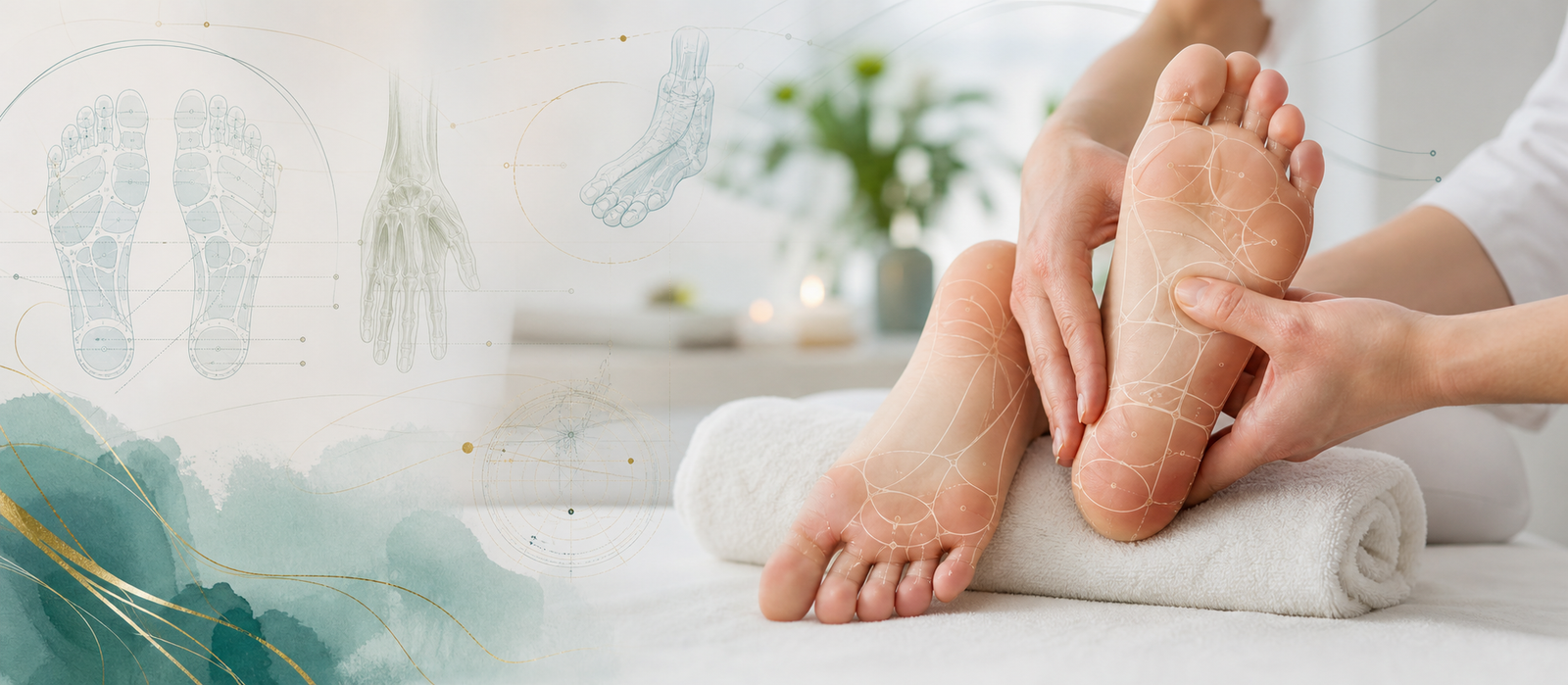
Clinical Photo
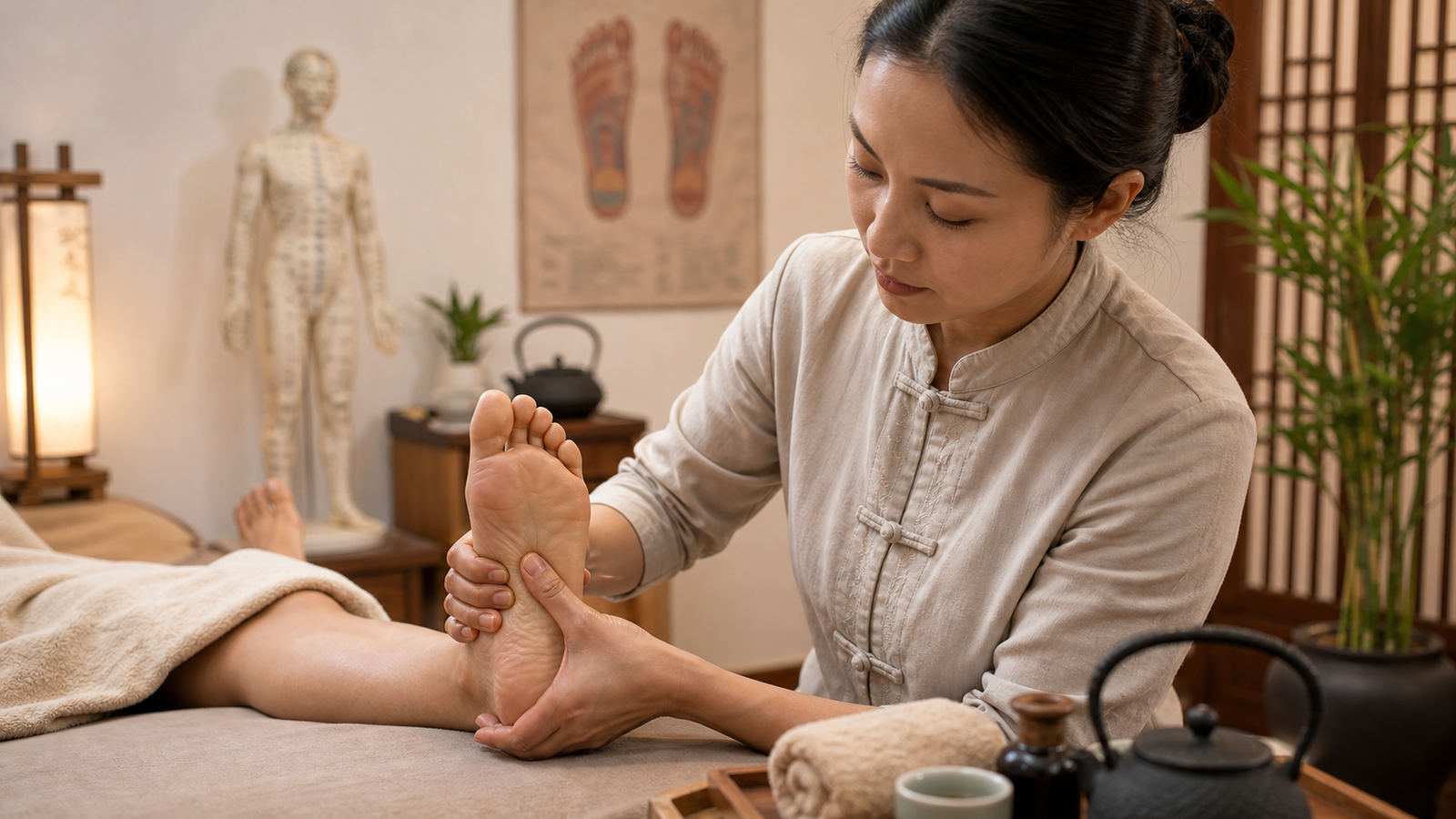
Premium Infographic
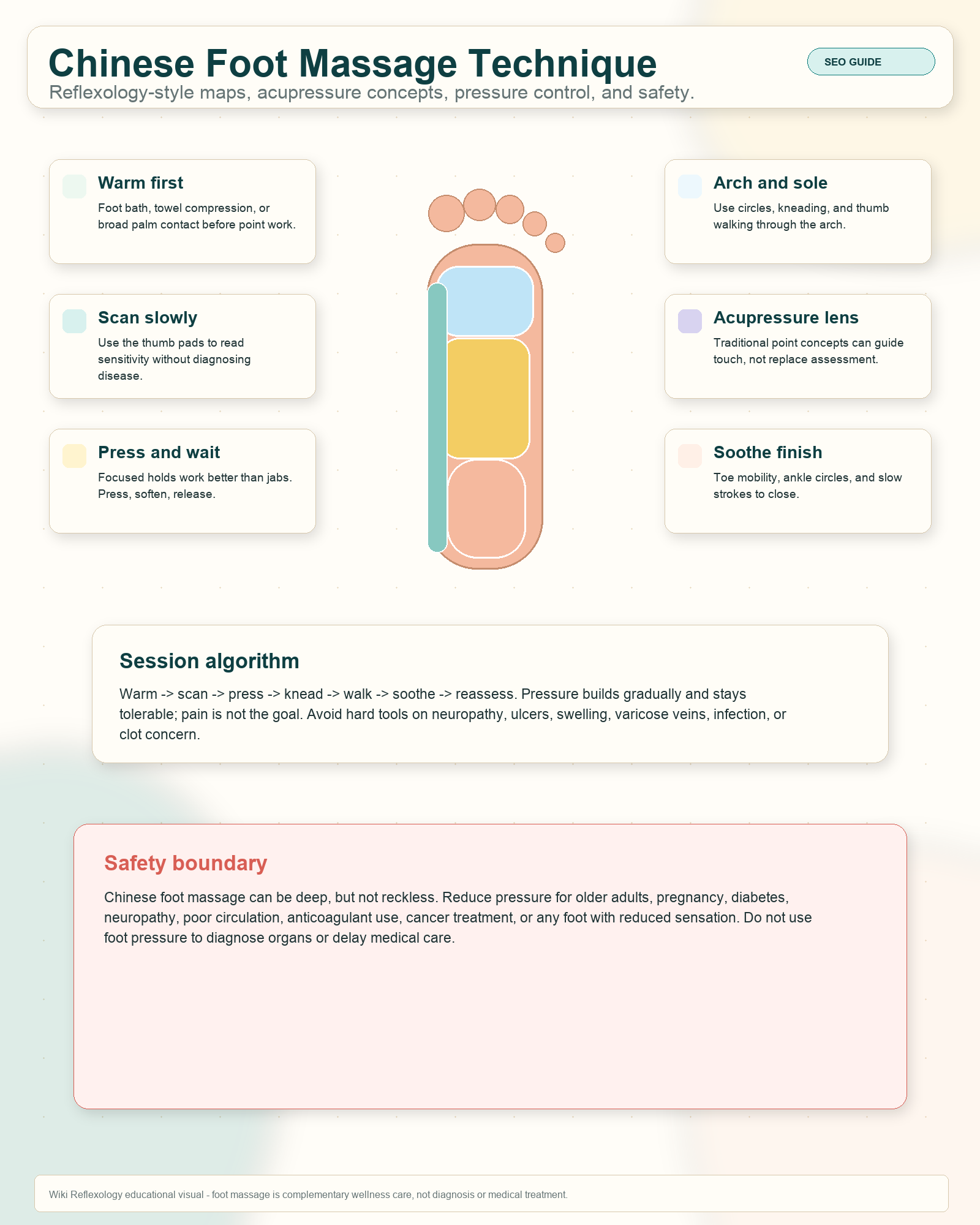
Quick Answer: What Is Chinese Foot Massage Technique?
Chinese foot massage technique is a pressure-focused style of foot work often influenced by reflexology maps, acupressure concepts, and traditional Chinese medicine language. In many clinics it begins with warming, sometimes a foot soak, then progresses into thumb pressure, knuckle kneading, arch work, heel work, toe work, and a calming finish.
The best Chinese foot massage technique is precise but not reckless. It may feel deeper than a spa massage, but it still requires screening, pressure calibration, and respect for red flags. Traditional point names and reflex maps can guide the session, but they should not be used to diagnose disease.
Key Takeaways
- Chinese foot massage often combines reflexology-style zones with acupressure-inspired point work.
- A professional sequence is warm, scan, press, knead, walk, soothe, and reassess.
- Pressure should build gradually. A strong sensation is acceptable only when the client can relax and breathe normally.
- Avoid strong pressure with diabetes, neuropathy, foot ulcers, vascular disease, acute injury, swelling, infection, suspected clots, or reduced sensation.
- Chinese foot massage is best described as traditional wellness support, not a treatment that proves or cures organ problems.
How Chinese Foot Massage Is Usually Structured
A session often begins with warmth. In some settings this means a foot bath; in others it means towel compression or broad hand contact. Warmth helps the client settle and gives the therapist time to notice skin condition, temperature, swelling, and sensitivity.
The therapist then scans the sole with thumbs or knuckles. This scan should be slow. It is not a test for disease. It is a way to find tight, sensitive, or guarded areas and adapt the pressure.
The main work usually includes pressure through the arch, ball of the foot, heel, toes, and inner edge. Some practitioners include acupressure-style holds such as the traditional bubbling spring area near the front of the sole. Use these areas as comfort landmarks rather than medical claims.
Step-by-Step Chinese Foot Massage Technique
- First, support the foot and use palm compression from heel to toes.This begins the session without startling the nervous system Next, knead the arch with the thumb pads, keeping the wrist relaxed and the pressure angled into the soft tissue rather than into bone
- Second, work the ball of the foot with small circles or thumb walking.Keep the pressure broad enough to avoid sharp digging Then work the heel with palm pressure and circular friction, especially when the client reports general foot fatigue
- Third, use focused holds.Press, wait, soften, and release The hold is usually more useful than a jab If a point feels sharp, burning, electric, or nauseating, reduce pressure or stop
- Fourth, finish with toe traction, ankle circles, and a slow smoothing stroke from toes to heel.The finish matters because it helps the client leave the session calm instead of overstimulated
Reflexology Maps vs Acupressure Concepts
Reflexology maps usually divide the sole into body-region zones: toes, ball of foot, arch, heel, and inner edge. Chinese acupressure concepts may use meridians and named points. These systems are historically and conceptually different, even though modern foot massage clinics sometimes blend them.
For reader clarity, it helps to say this plainly: Chinese foot massage technique can be reflexology-inspired and acupressure-informed, but a tender spot on the foot should not be treated as a diagnosis. The map guides touch; medical assessment belongs to healthcare professionals.
This boundary makes the article more trustworthy. It gives a direct answer without exaggerating what foot pressure can prove.
Pressure, Tools, and Safety
Chinese foot massage is sometimes known for strong pressure. Stronger is not always better. A client with healthy tissue and good sensation may enjoy firm work, while another client may need very light pressure. The best therapist can adapt both.
Avoid hard tools or deep knuckle pressure over numbness, bruises, swelling, wounds, varicose veins, inflamed tissue, recent injuries, or fragile skin. People with diabetes, neuropathy, poor circulation, clot risk, or a history of foot ulcers need especially cautious care.
Use a simple feedback script: light, medium, strong, sharp, numb, or okay? If the client reports sharp, electric, numb, or spreading sensation, stop. If they hold their breath, tense the shoulders, or pull away, soften the technique.
Benefits and Realistic Expectations
Chinese foot massage may support relaxation, foot comfort after standing, body awareness, and a sense of recovery. It may also feel emotionally grounding because the session is structured, repetitive, and focused.
It should not be marketed as detoxification, organ repair, immune boosting, or disease reversal. Traditional language can be respected without turning it into unsupported medical advertising. A clear, conservative article will usually perform better long term because readers can trust it.
How to Build a Safe Chinese Foot Massage Session
A safe Chinese foot massage session starts with consent and pressure calibration. Ask whether the client prefers light, medium, or firm work, then verify with a 1 to 10 scale after the first minute. This prevents the common problem where the client tolerates painful pressure silently because they think the therapist expects it.
Use zones before points. Work the whole sole, then the arch, then specific sensitive areas. If you begin with a strong point, the nervous system may guard and the rest of the session becomes harder. Broad pressure first makes specific pressure safer.
Finish with smoothing and warmth. A session that ends abruptly after deep pressure can leave the client overstimulated. Gentle palm strokes, toe mobility, and still contact help the body register the treatment as complete.
Common Mistakes in Chinese Foot Massage Technique
The first mistake is confusing intensity with quality. Some Chinese foot massage businesses are known for deep pressure, but professional technique is not a pain contest. A skilled therapist can work deeply without creating sharp pain or bruising.
The second mistake is using traditional point language too medically. It is acceptable to say that a point is traditional, calming, or commonly used in a wellness sequence. It is not responsible to say that pressure on a point proves a kidney, liver, heart, or digestive diagnosis.
The third mistake is ignoring aftercare. After a strong session, the client should know what is normal and what is not. Mild tenderness can happen. Bruising, numbness, swelling, weakness, or worsening pain should not be dismissed as detox.
Choosing a Chinese Foot Massage Practitioner
A good Chinese foot massage practitioner should be able to adjust pressure quickly. If the therapist only works hard, the service is not truly customized. Look for someone who can use light, medium, and firm contact while keeping the rhythm controlled.
The practitioner should also respect medical boundaries. Traditional language can be part of the cultural style, but the therapist should not tell clients that foot pain proves an organ disease or that massage replaces medication. Responsible practitioners explain technique, not diagnosis.
For clients who want deeper pressure, the safest approach is gradual. Start medium, let the foot warm, then increase only if the client stays relaxed. A client who tenses, sweats, pulls away, or stops breathing normally is not receiving better therapy; they are receiving too much pressure.
A high-quality session usually ends calmly. The foot should feel awake, lighter, or relaxed, not bruised or punished. If strong soreness lasts more than a short period, or if numbness or swelling appears, the next step is assessment rather than another harder session.
FAQ: Chinese Foot Massage Technique
Is Chinese foot massage the same as reflexology?
No. Many clinics blend reflexology-style maps with Chinese acupressure concepts, but the systems are not identical. Both should be used as wellness frameworks, not diagnostic tools.
Why can Chinese foot massage feel intense?
It often uses focused pressure and slower holds. Intensity should remain tolerable. Pain, numbness, burning, or nausea are signals to reduce pressure or stop.
What is the best Chinese foot massage sequence?
Warm the foot, scan gently, press the arch and ball of foot, knead the heel, mobilize toes and ankle, then finish with soothing strokes and reassessment.
Who should avoid strong Chinese foot massage?
People with diabetes, neuropathy, ulcers, poor circulation, acute injury, infection, unexplained swelling, clot concern, or reduced sensation should avoid strong pressure unless medically cleared.
References and Further Reading
Medical and professional sources
- NCCIH: Reflexology. Evidence and safety overview for reflexology as a complementary approach.
- NCCIH: Massage Therapy: What You Need To Know. General massage safety, evidence, and scope context.
- NIDDK: Diabetic Foot Problems. Medical foot-care safety context for diabetes and reduced sensation.
- NCCIH: Traditional Chinese Medicine: What You Need To Know. General safety and evidence context for traditional Chinese medicine approaches.
- NCCIH: Acupuncture: What You Need To Know. Safety framing for acupuncture and related point-based traditions; included for acupressure context.
Book references
- Ingham, E. Stories the Feet Can Tell Thru Reflexology. Historical reflexology reference.
- Byers, D. Better Health with Foot Reflexology. International Institute of Reflexology.
- Dougans, I. The Complete Illustrated Guide to Reflexology. Reflex map and practice reference.
- Chia, M. and Li, J. Reflexology and acupressure style foot work are best treated as traditional map systems, not diagnostic tests.