Chest pain reflexology safety, foot hand and ear reflex zones
How to Use Reflexology for Chest Pain: Emergency-First Safety Guide
Learn an emergency-first reflexology guide for non-urgent chest discomfort, with foot, hand, and ear reflex zones, red flags, safety rules, and professional diagrams.
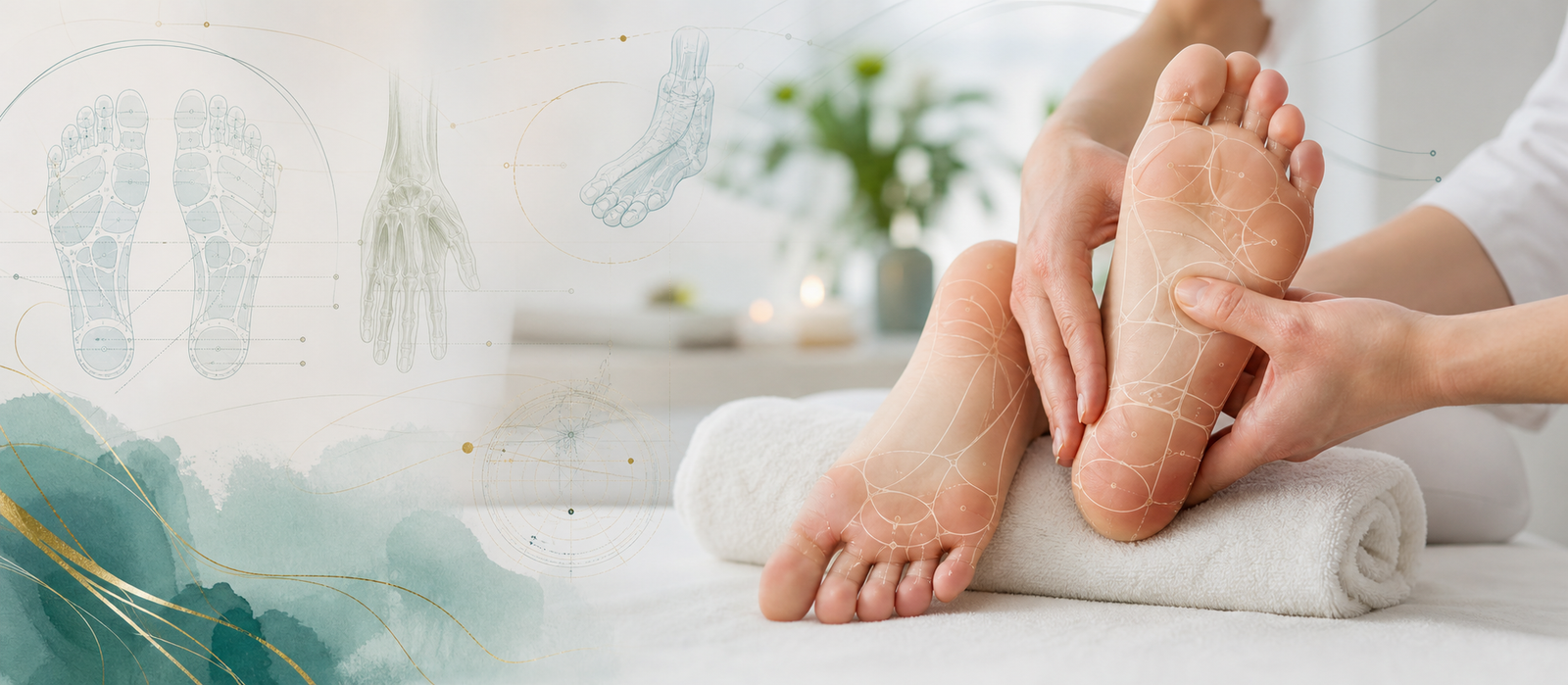
Chest Pain Is an Emergency-First Topic
Chest pain is different from ordinary muscle tension, tired feet, or mild stress discomfort. It can come from heartburn, chest wall strain, anxiety, lung irritation, shingles, or posture-related tightness, but it can also signal a heart attack, angina, pulmonary embolism, pneumonia, pericarditis, aortic disease, or another urgent medical problem. That is why any article about using reflexology for chest pain must begin with the safety decision, not with a foot map.
The public WikiHow article on using reflexology to relieve chest pain introduces foot, hand, and ear reflexology routines for chest, lung, heart, digestive, and upper-back areas. This Wiki Reflexology guide keeps that broad educational structure, but rebuilds it into an emergency-first resource. Reflexology may be considered only for mild, familiar, non-urgent chest discomfort after urgent causes have been ruled out or when a clinician has already explained the symptom pattern.
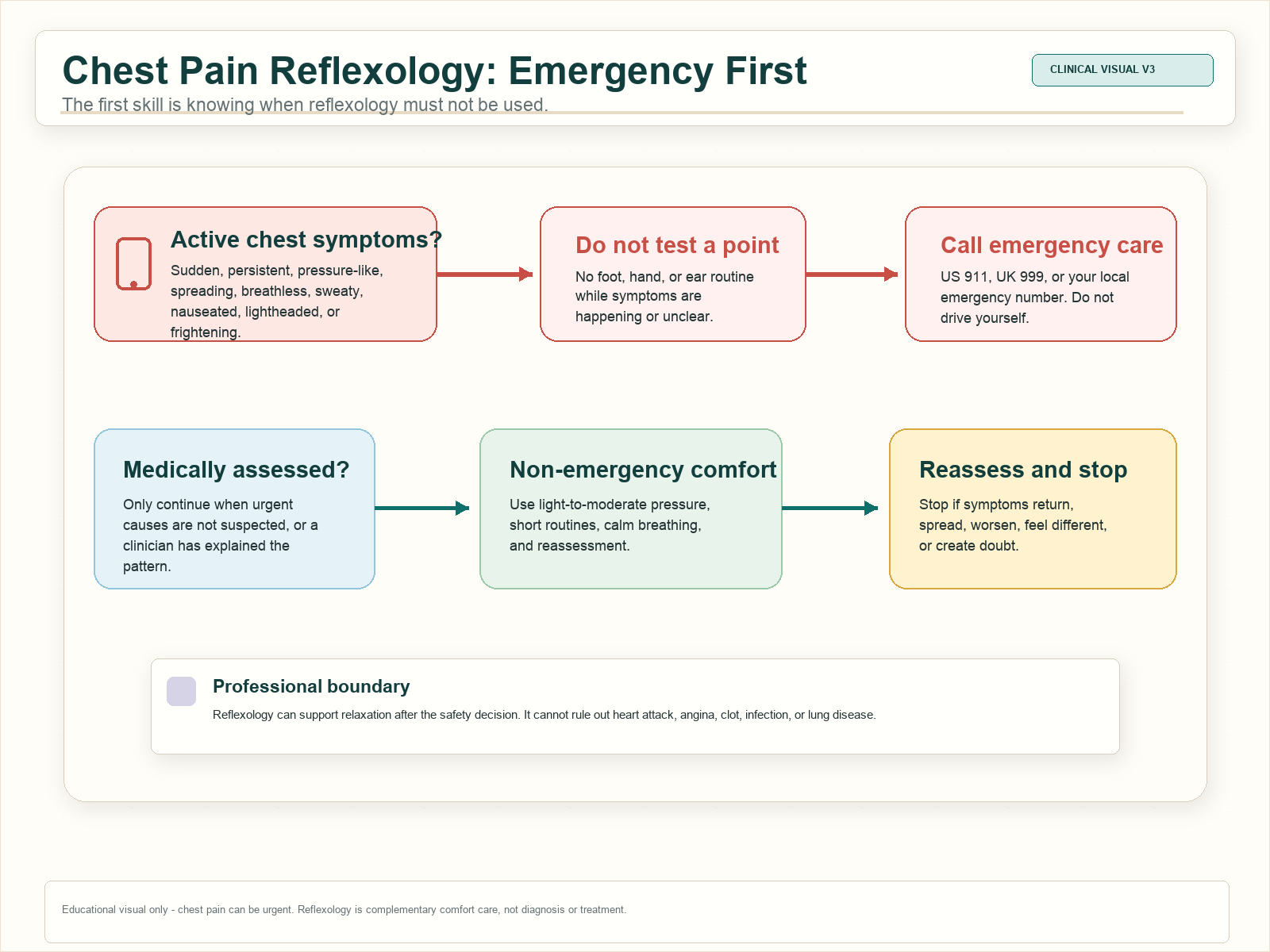
If you have sudden chest pain or discomfort that does not go away, pressure or squeezing in the chest, pain spreading to an arm, neck, jaw, stomach, or back, shortness of breath, sweating, nausea, lightheadedness, faintness, or a sense that something is seriously wrong, do not use reflexology as a test. Call emergency services now. In the United States, call 911; in the United Kingdom, call 999; elsewhere use your local emergency number.
Editorial note: the WikiHow page was used as a topic reference only. This article is original, substantially expanded, and rebuilt with professional diagrams, emergency-first chest pain guidance, safety boundaries, foot-hand-ear reflex maps, breathing support, and medical source references.
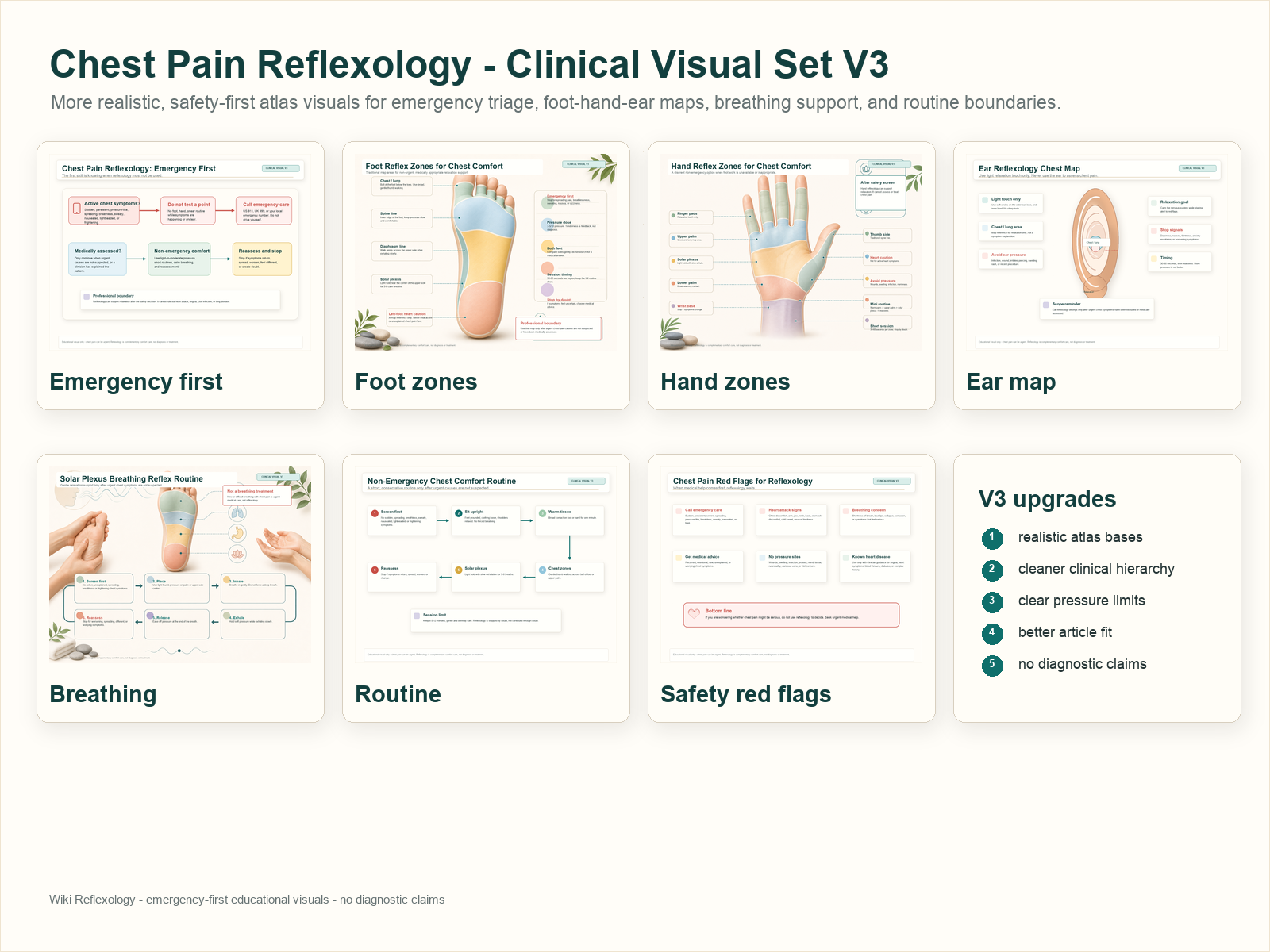
Professional Visual Set
These diagrams are educational and deliberately conservative. They show the chest-pain decision gate first, then traditional foot, hand, and ear reflex zones that may be used only in a non-emergency setting. They also show a simple solar-plexus breathing routine and a red-flag safety chart.
What Reflexology Can and Cannot Do for Chest Discomfort
Reflexology is a manual practice that applies pressure to mapped areas of the feet, hands, or ears. In traditional reflexology, the chest, lungs, heart, diaphragm, solar plexus, spine, and digestive reflex areas are used to support relaxation and perceived balance in the corresponding body regions. In modern safety language, reflexology is best understood as a complementary comfort practice, not a diagnostic or emergency tool.
For a person who has already been medically assessed and told that their chest sensation is non-cardiac, familiar, and not dangerous, reflexology may help create a calm pause. It may support slower breathing, reduce stress arousal, soften protective muscle tension, and help the person notice whether posture, digestion, or anxiety is contributing to the sensation. Those are comfort outcomes. They are not proof that a heart, lung, or digestive problem has been treated.
Reflexology cannot rule out heart attack, angina, blood clot, pneumonia, infection, arrhythmia, aortic disease, gallbladder disease, reflux complications, rib fracture, or any other medical cause of chest pain. It cannot replace an electrocardiogram, blood tests, oxygen assessment, imaging, medication, or emergency care. If chest pain is new, severe, unexplained, recurrent, or worrying, the right next step is medical advice.
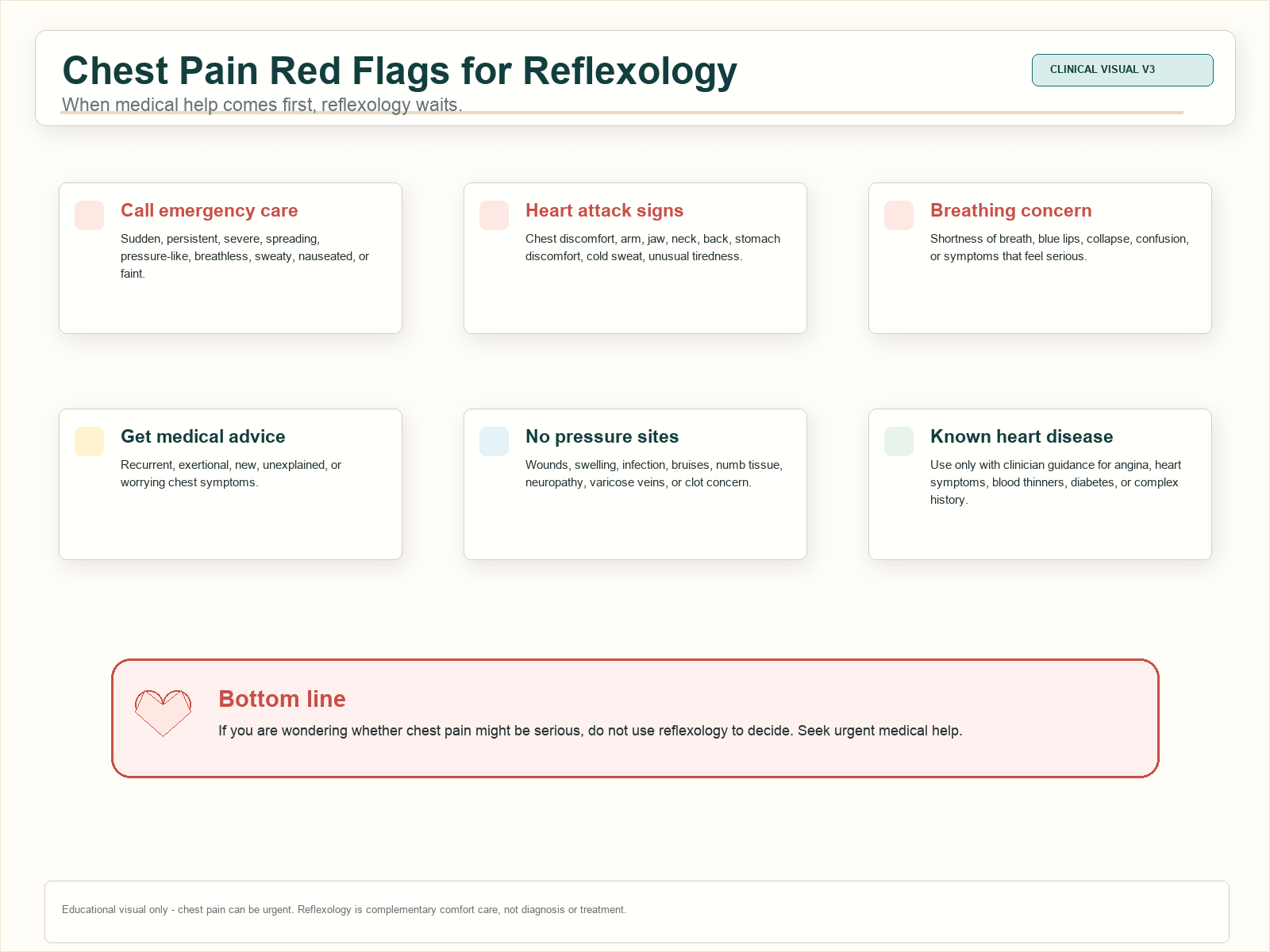
When to Call Emergency Services Instead of Using Reflexology
According to the NHS, immediate help is needed for sudden chest pain or discomfort that does not go away, pain that feels like pressure, squeezing, burning, or indigestion, pain spreading to the arms, neck, jaw, stomach, or back, or chest pain with sweating, nausea, lightheadedness, or shortness of breath. The American Heart Association also emphasizes that heart attack symptoms can start slowly and may include chest discomfort, shortness of breath, cold sweat, nausea, lightheadedness, unusual tiredness, or discomfort in the arms, back, neck, jaw, or stomach.
Do not wait to see whether a reflex point helps. Do not drive yourself to the hospital if you suspect a heart attack. Do not ask someone to press your feet while symptoms continue. Do not assume that the symptom is anxiety, reflux, or muscle strain simply because you have had those before. Chest symptoms deserve caution because time-sensitive treatment can save heart muscle and lives.
Non-urgent medical advice is still appropriate for chest pain that comes and goes, chest pain that went away but worries you, recurrent chest tightness, symptoms after exertion, symptoms that appear with stress, or symptoms that are hard to explain. Reflexology can be part of a comfort plan only after this safety question has been answered.
Foot Reflexology Zones for Non-Urgent Chest Comfort
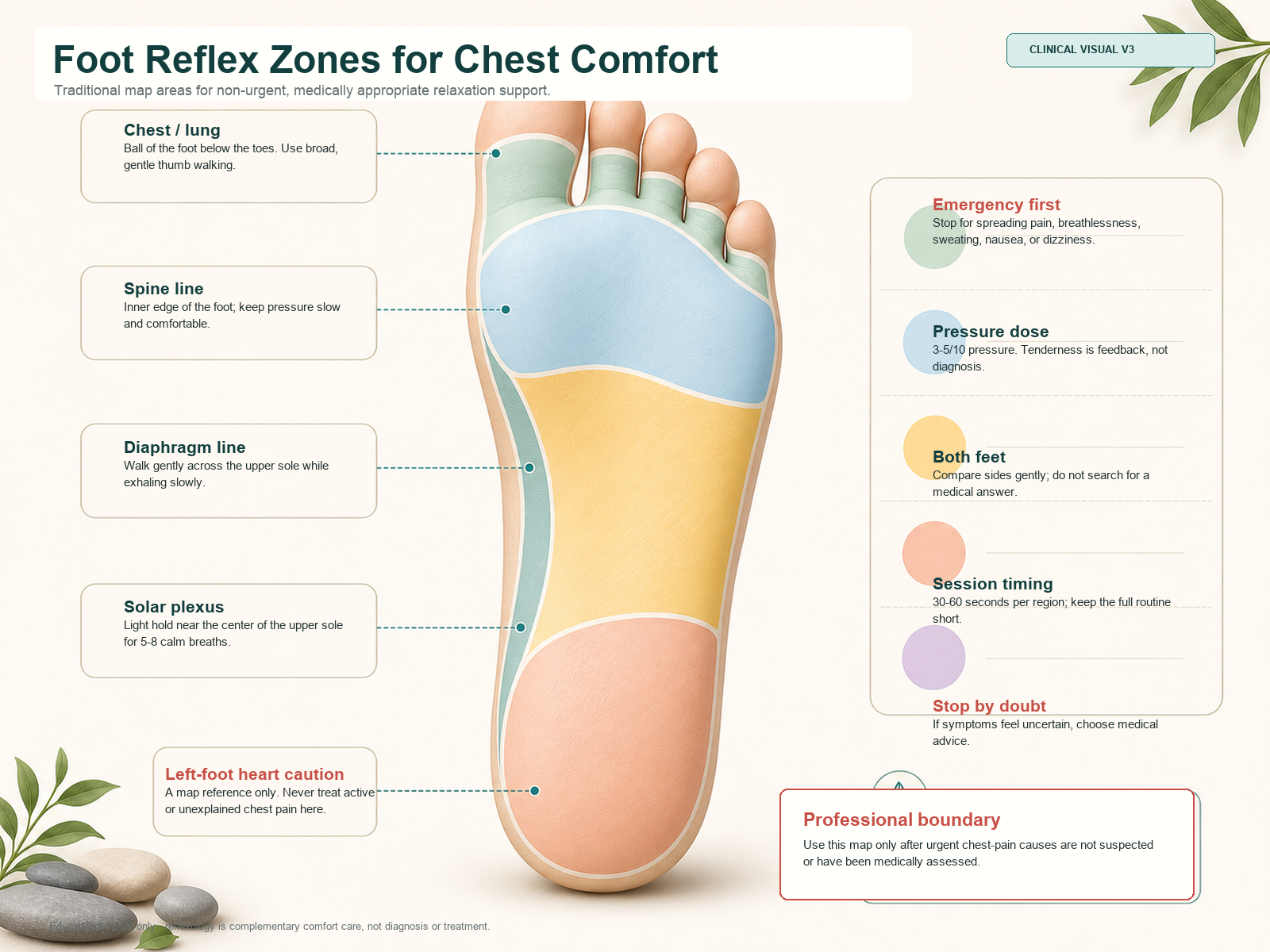
The WikiHow reference begins with foot reflexology, which is the traditional starting point for many reflexology routines. For chest-related maps, practitioners often discuss the ball of the foot for chest and lung zones, the area below the big toe on the left foot for the traditional heart reflex, the solar plexus point near the center of the upper sole, the diaphragm line across the foot, the spine line along the inner edge, and digestive zones below the ball of the foot.
For non-urgent comfort work, start broadly rather than chasing a single dot. Warm the whole foot with slow, even pressure. Work the toes lightly, then the ball of the foot, then the diaphragm line. Use the thumb to walk across the ball of the foot under the toes. Keep pressure soft to moderate. A safe session should feel relaxing, not intense. If the person becomes breathless, pale, sweaty, nauseated, dizzy, or more uncomfortable, stop and seek medical help.
The left-foot heart reflex is especially important to frame carefully. Pressing a traditional heart reflex zone does not treat heart disease. It is not a substitute for heart medication, emergency evaluation, or cardiology care. For someone with known heart disease, recent chest pain, unexplained symptoms, pacemaker concerns, blood thinners, diabetes, neuropathy, or circulation problems, professional medical guidance matters before massage or reflexology.
Hand Reflexology Zones for Chest and Breathing Support
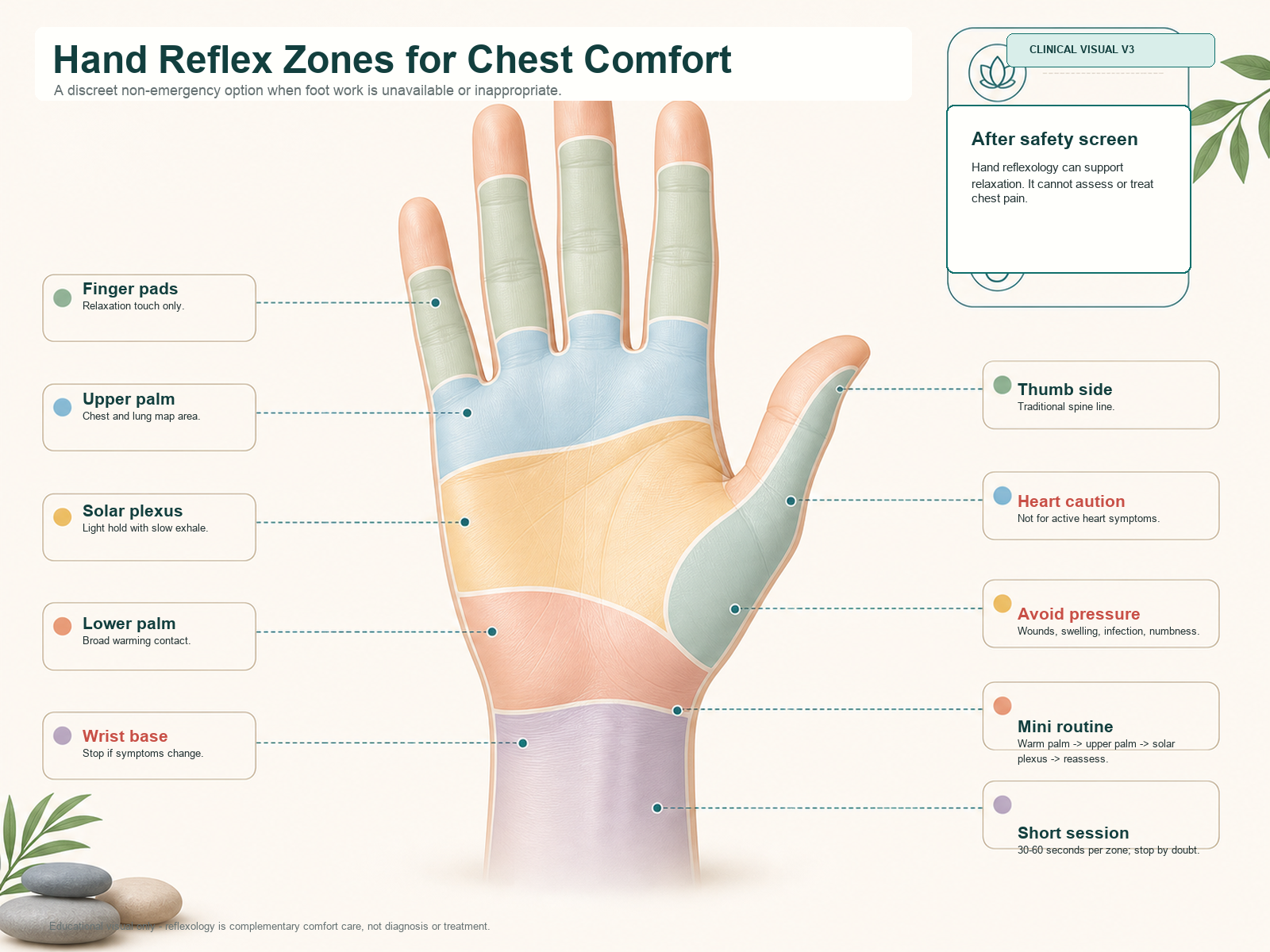
Hand reflexology is useful when feet are unavailable, sensitive, injured, or inappropriate to touch. Traditional hand maps place chest and lung zones across the upper palm under the fingers, the heart reflex in the upper palm region, the solar plexus near the center of the palm, the spine reflex along the thumb side, and digestive reflexes lower in the palm. These zones mirror the same concept used in foot reflexology, but they are easier to access in a chair, car, or waiting room.
For a non-emergency routine, rub the whole palm to warm it, then use the opposite thumb to make small circles across the upper palm for 30 to 60 seconds. Pause at the center of the palm for slow breathing. Work both hands. If the goal is stress-related chest tightness that has already been medically assessed, keep the routine quiet and grounding: press, breathe, release, and reassess.
Hand reflexology should not be used to hide active chest symptoms. If chest discomfort is happening now and is new, persistent, spreading, exertional, or accompanied by shortness of breath, sweating, nausea, lightheadedness, weakness, or fear, stop the hand routine and call emergency services. Avoid hand pressure over wounds, swelling, infection, recent surgery, severe arthritis flare, numbness, or reduced sensation.
Ear Reflexology for Chest Discomfort: Use Only as Relaxation Support
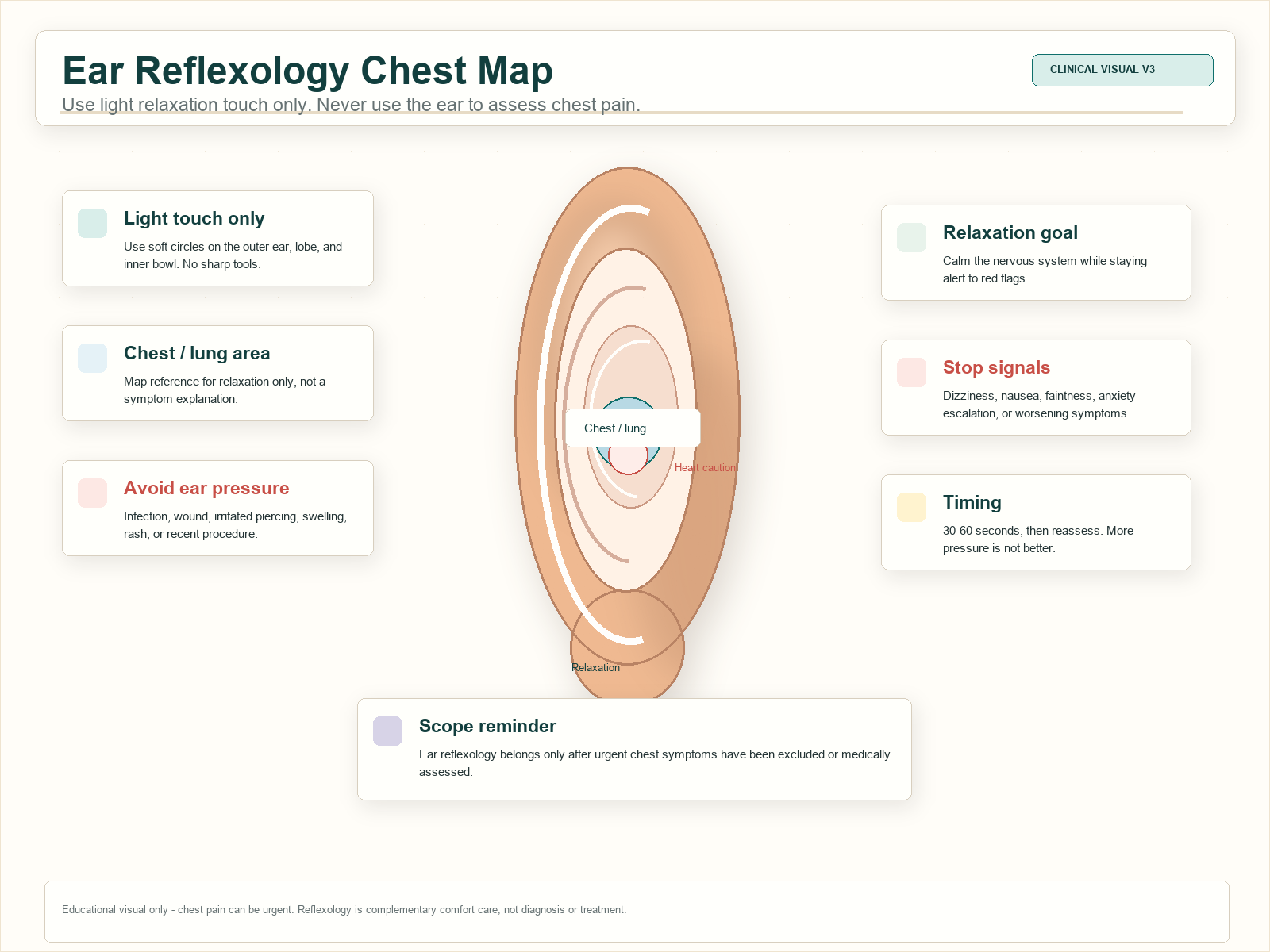
The WikiHow article also mentions ear reflexology. Ear maps vary by school, but many place chest, lung, heart, diaphragm, and stress-related zones within the inner bowl of the ear and nearby cartilage. Ear work is usually light: small circles, gentle holds, or soft rubbing. It should never be painful and should not involve digging with fingernails or sharp tools.
For relaxation support, use clean hands and gentle pressure. Massage the outer ear, then the lobe, then the inner bowl lightly for 30 to 60 seconds. Pair the touch with slow nasal breathing or relaxed exhalation. The goal is nervous-system settling, not treatment of a chest condition. If symptoms are active, worsening, or concerning, stop and use medical care.
Avoid ear reflexology over infection, wounds, piercings that are irritated, swelling, rash, recent procedures, or skin that is painful to touch. Do not press deep into the ear canal. If the person feels dizzy, nauseated, faint, or more anxious, stop. Ear reflexology can be a calming ritual, but it is not a chest pain assessment.
Solar Plexus and Diaphragm Reflexes for Calming the Breath
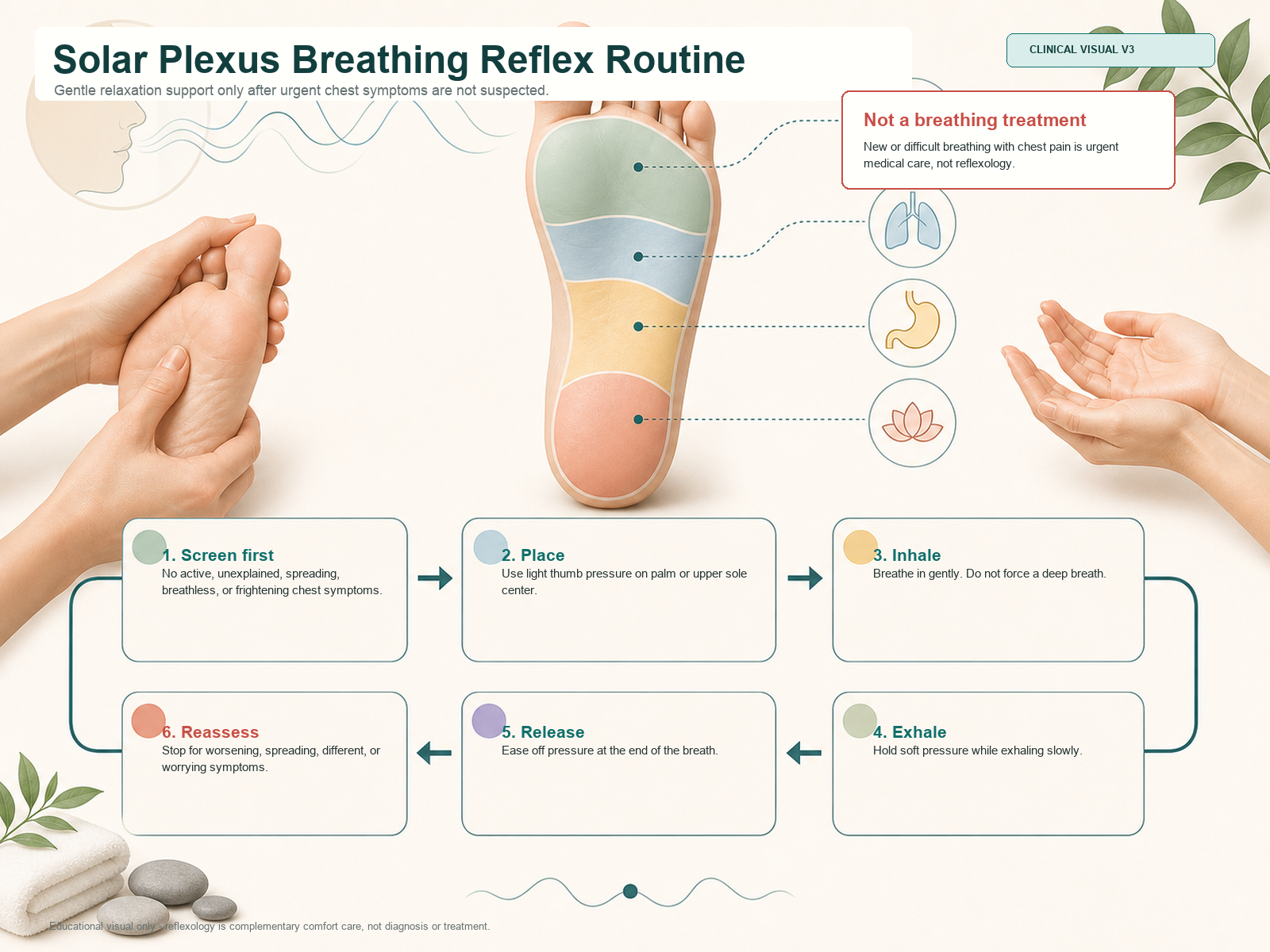
Many reflexology routines for chest discomfort focus less on the heart reflex itself and more on breathing support. The solar plexus reflex is commonly placed near the center of the upper sole or palm. The diaphragm line is often mapped across the foot or hand below the chest area. In a non-urgent setting, these zones can be useful because the routine encourages slow exhalation, relaxed shoulders, and a calmer breathing pattern.
Try this only when emergency symptoms are absent and the chest sensation is mild, familiar, and already understood. Place the thumb on the solar plexus reflex area of the foot or palm. Inhale gently through the nose. Hold light pressure during the exhale. Release slightly at the end of the breath. Repeat for five to eight breaths. Then walk the thumb across the diaphragm line with very gentle pressure.
This is not a breathing treatment for shortness of breath from a heart or lung problem. If breathing is difficult, new, severe, or paired with chest pain, use emergency care. The routine is for relaxation support in a non-urgent context, similar to a calm pause before sleep, after a stressful day, or after a clinician has explained a benign symptom pattern.
A Non-Emergency Reflexology Routine for Chest Comfort
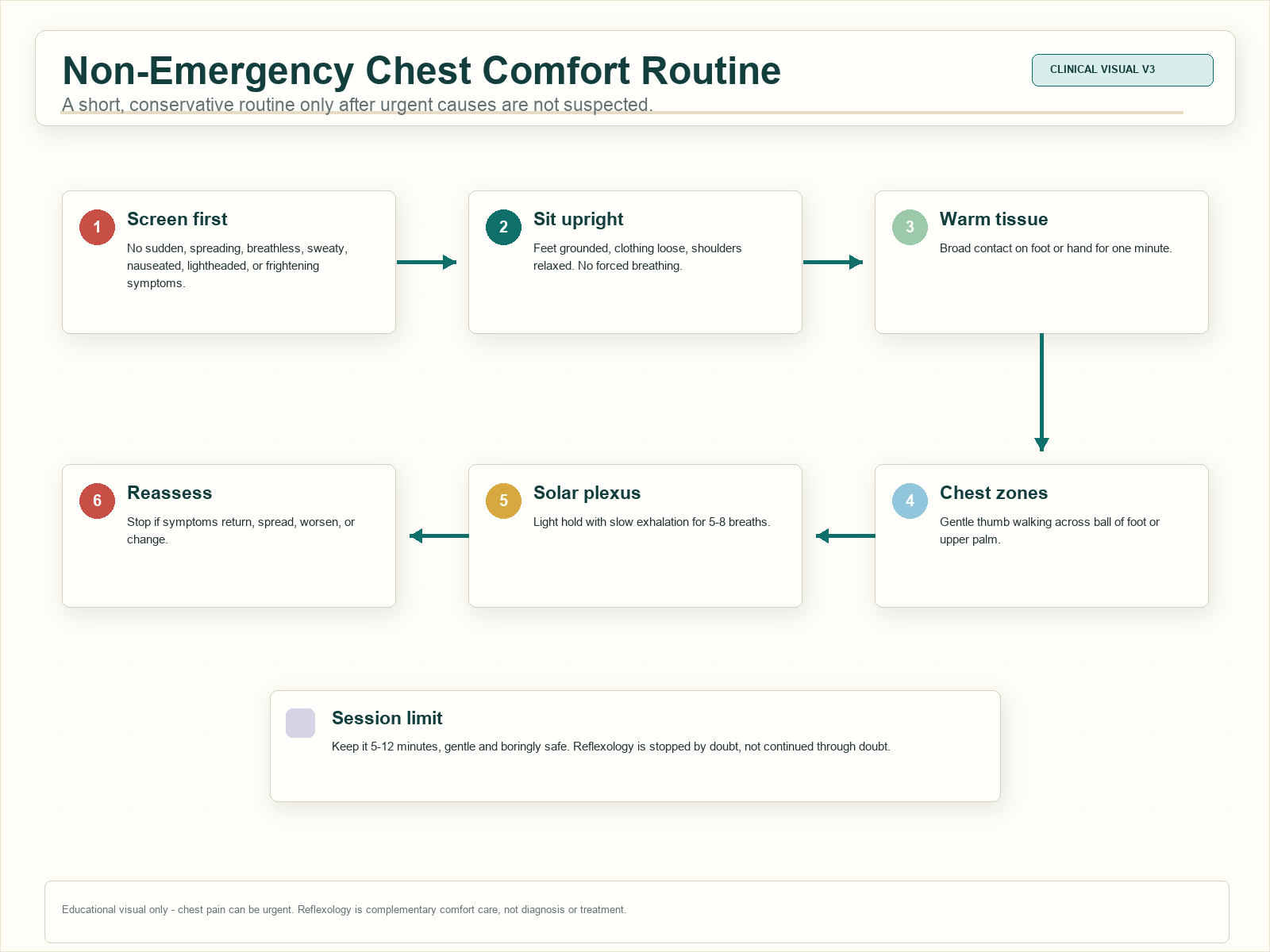
This routine is not for active, unexplained, sudden, severe, spreading, exertional, or worrying chest pain. It is for mild, familiar, non-urgent chest tightness or stress-related discomfort after appropriate medical advice. If there is any doubt, do not do the routine; seek medical care.
- Screen first: stop for chest pain that is sudden, persistent, spreading, breathless, sweaty, nauseating, lightheaded, exertional, or frightening.
- Settle the body: sit upright, loosen tight clothing, place both feet on the floor, and take three slow breaths without forcing the inhale.
- Warm the foot or hand: use broad contact for one minute. Avoid numb, swollen, bruised, wounded, infected, or painful tissue.
- Work chest and lung zones: use gentle thumb walking across the ball of the foot or upper palm for 30 to 60 seconds per side.
- Add solar plexus breathing: hold light pressure at the center of the upper sole or palm for five to eight calm exhalations.
- Reassess: stop if symptoms worsen, spread, return strongly, or feel different. Record what changed and seek medical advice when uncertain.
Keep the full routine between 5 and 12 minutes. Do not press hard into the left-foot heart reflex, dig into the chest wall, or use tools to create strong sensation. Gentle, repeatable, boringly safe pressure is the goal. The routine should feel like a relaxation protocol, not like an attempt to treat the heart.
Digestive, Stress, and Musculoskeletal Chest Sensations
Chest discomfort can be confusing because non-heart causes can feel dramatic. Heartburn or indigestion may create burning, pressure, sour taste, bloating, or discomfort after meals. Panic or anxiety may create chest tightness, faster heartbeat, sweating, dizziness, or a sharp continuous pain triggered by worry. Chest wall strain may hurt after exercise, lifting, coughing, or direct injury and can worsen with certain movements or deep breaths. Lung infections can cause chest pain with fever, cough, mucus, or breathing discomfort.
These patterns can overlap with heart symptoms, so do not self-diagnose from a reflexology chart. A person can have reflux and heart disease. A person can have anxiety and a heart attack. A person can have muscle pain and still need medical assessment if the pattern is new or worrying. Reflexology belongs after, not before, the safety decision.
If a clinician has already explained that your chest discomfort is related to digestion, stress arousal, or chest wall tension, reflexology may be paired with the actual plan: meal timing, reflux care, prescribed medication, stress support, breathing practice, posture changes, physical therapy, or exercise guidance. Use reflexology as a calm supporting ritual, not as the main treatment.
Use Reflexology Only When
The symptom is mild, familiar, medically assessed, non-urgent, and not worsening with exertion or spreading to other areas.
Stop and Seek Care When
The symptom is new, unexplained, severe, persistent, exertional, spreading, breathless, sweaty, nauseating, or frightening.
Common Mistakes to Avoid
- Trying reflexology during active chest pain: if symptoms could be urgent, call emergency services instead of testing a reflex point.
- Calling the left-foot heart reflex a heart treatment: it is a traditional map area, not a therapy for heart disease.
- Ignoring spreading symptoms: chest discomfort with pain in the arm, jaw, neck, back, stomach, or shoulder needs urgent caution.
- Using strong pressure: intense pressure can create soreness, anxiety, bruising, or false reassurance. Keep it light to moderate.
- Pressing unsafe tissue: avoid wounds, swelling, infection, bruises, numb areas, neuropathy, varicose veins, or suspected clot concerns.
- Skipping medical follow-up: recurrent chest pain, even if brief, deserves medical advice to make sure nothing serious is being missed.
Aftercare and Tracking
After a non-emergency reflexology session, track what matters: chest sensation intensity, breathing comfort, stress level, meal timing, posture, activity, medication use, and any symptoms that spread beyond the chest. Use a simple note such as: time, trigger, symptom, duration, what helped, and whether medical advice was sought.
If symptoms improve with relaxation, that still does not prove the cause was harmless. If symptoms recur, appear with exertion, wake you from sleep, or become harder to explain, seek medical advice. If symptoms worsen during a session, stop immediately. Reflexology should never make someone delay care because they are hoping the next point will work.
For practitioners, documentation should include the screening conversation. Record that the client was advised to seek emergency or medical care for red flags. Record the areas used, pressure level, response, aftercare, and referral advice. Do not document that a reflexology response indicates a heart, lung, digestive, or emotional diagnosis.
Our Recommendation as a Reflexology Education Site
Our recommendation is simple: do not use reflexology to manage active or unexplained chest pain. Use reflexology only as a gentle relaxation support after urgent causes have been ruled out or when the person already has a clear medical explanation and a care plan. This is not timid wording; it is the professional standard for a symptom that can be life-threatening.
For students, chest pain is a boundary topic. The skill is not memorizing where the heart reflex sits on the left foot. The skill is knowing when to stop, when to refer, and how to communicate calmly. A careful reflexologist should be proud to say, "This is not for reflexology right now; please get medical help."
For readers at home, start with the emergency-first checklist. If the symptom passes that test and is genuinely non-urgent, use broad foot or hand pressure, solar-plexus breathing, and gentle reassurance. Keep the routine short. Do not chase pain. If you are worried, get checked.
FAQ: Reflexology and Chest Pain
Can reflexology relieve chest pain?
Reflexology may support relaxation for mild, familiar, medically assessed chest discomfort, but it should not be used to treat active, unexplained, sudden, severe, spreading, or worrying chest pain.
Which reflex point is used for the chest?
Traditional maps often use the ball of the foot or upper palm for chest and lung zones, a left-foot heart reflex, the diaphragm line, and the solar plexus reflex. These are comfort map areas, not diagnostic signs.
What should I do if chest pain starts during a session?
Stop the session. If the pain is sudden, persistent, spreading, associated with shortness of breath, sweating, nausea, lightheadedness, or feels serious, call emergency services immediately.
Is reflexology safe for people with heart disease?
People with known heart disease, angina, recent heart symptoms, blood thinner use, diabetes, neuropathy, circulation problems, or complex medical histories should ask their healthcare professional before using reflexology for chest-related symptoms.
Can anxiety cause chest pain?
Anxiety and panic can cause chest sensations, but it is unsafe to assume chest pain is anxiety without considering medical red flags. New, severe, persistent, or worrying chest symptoms should be assessed.
Scientific, Medical, Therapeutic, and Book References
Online references
- WikiHow: How to Use Reflexology to Relieve Chest Pain. Topic reference for the beginner question; not copied.
- NHS: Chest Pain. Medical guidance on chest pain symptoms and urgent care triggers.
- American Heart Association: Warning Signs of a Heart Attack. Heart attack symptoms and emergency guidance.
- NCCIH: Reflexology. Evidence and safety overview for reflexology.
- NCCIH: Chronic Pain and Complementary Health Approaches. Safety context for complementary health approaches.
- NHS: Panic Disorder. Medical context for panic symptoms and the importance of assessment.
Book references
- Ingham, E. Stories the Feet Can Tell Thru Reflexology. Historical reflexology reference.
- Byers, D. Better Health with Foot Reflexology. International Institute of Reflexology.
- Dougans, I. The Complete Illustrated Guide to Reflexology. Reflex map and practice reference.
- Marquardt, H. Reflexotherapy of the Feet. Professional reflex-zone therapy reference.