Foot reflexology, whole-body pain comfort, nervous system calming, and safety
How Foot Reflexology May Calm Whole-Body Pain Through the Feet
Learn how foot reflexology may ease body discomfort through touch, nervous system calming, pressure maps, pain modulation, and safety-led care.
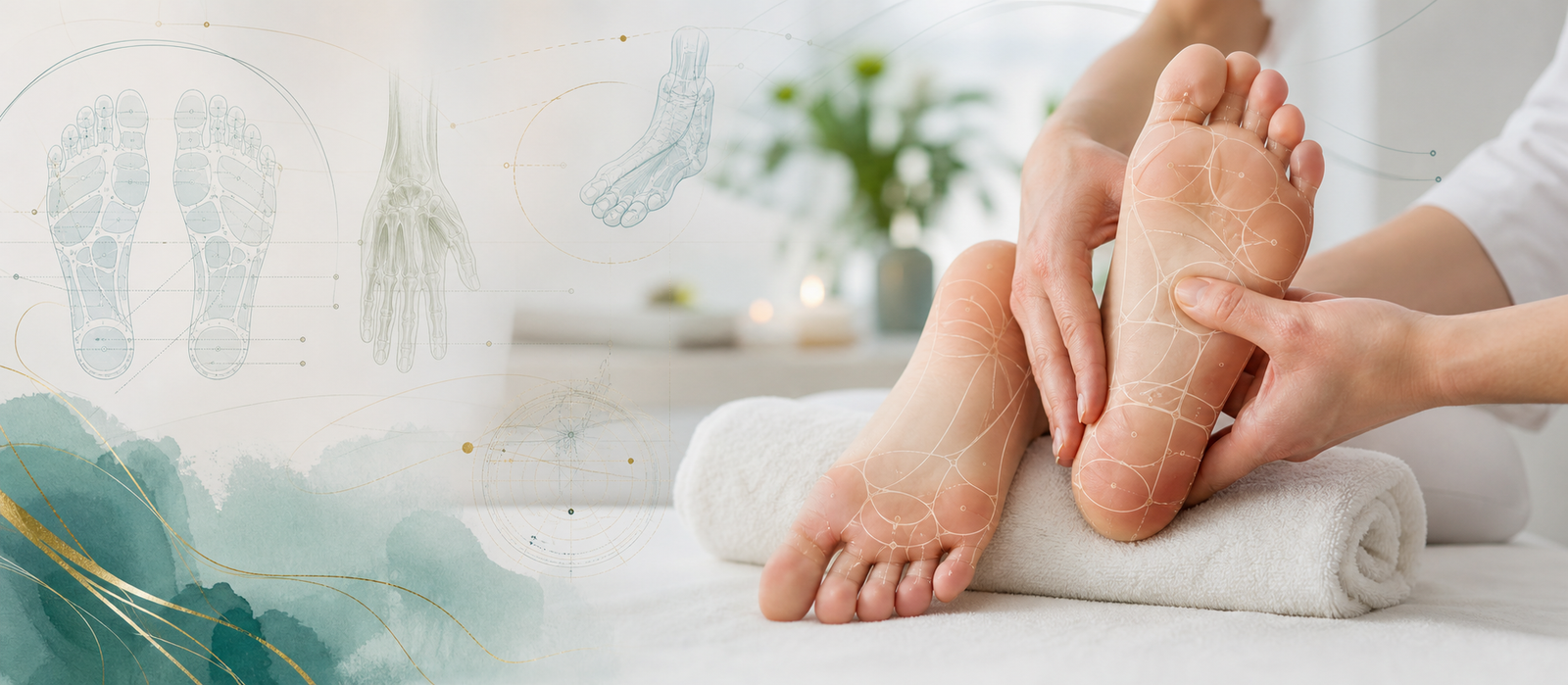
Clinical Photo
Premium Infographic
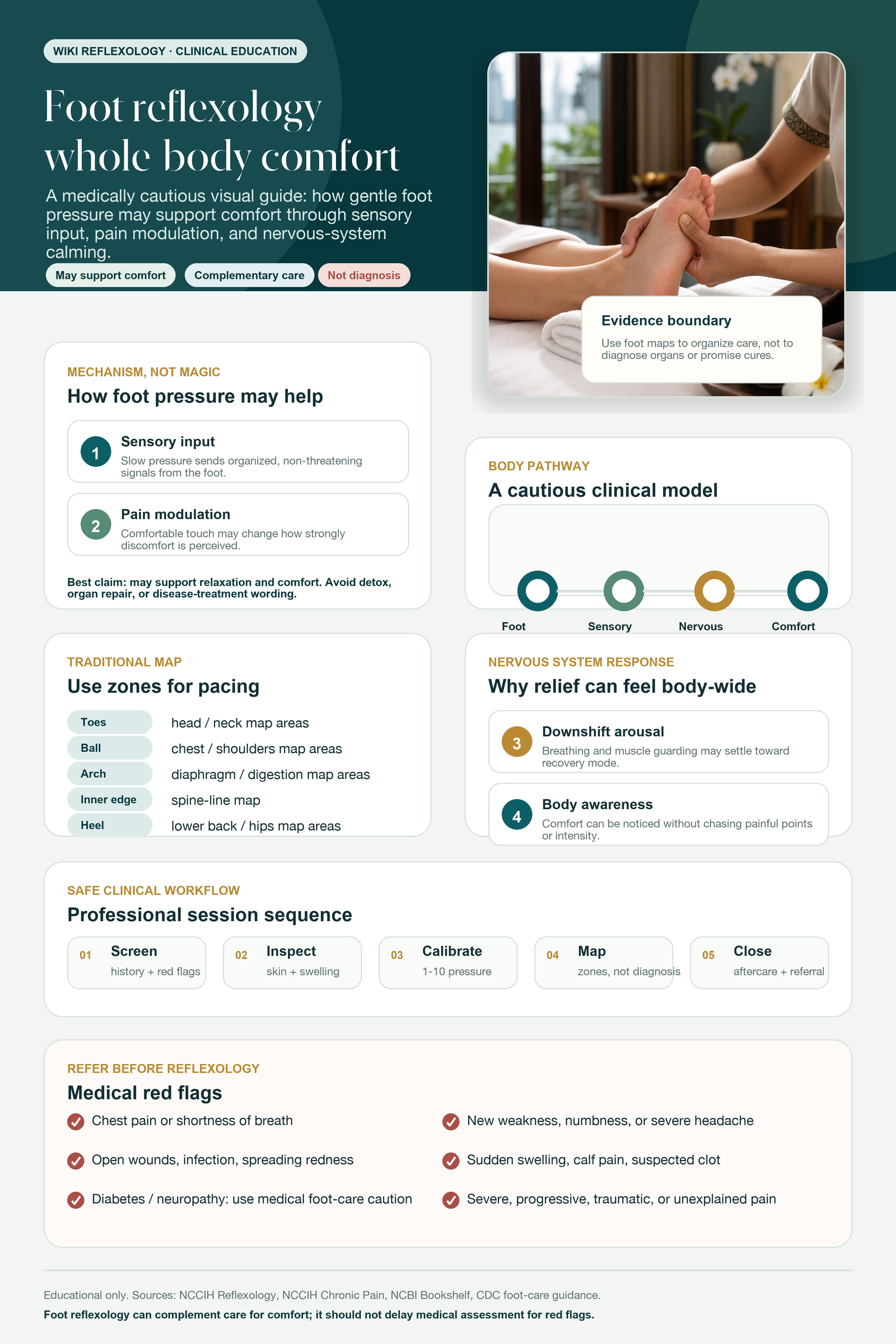
Quick Answer: Can Reflexology Affect the Whole Body Through the Feet?
Foot reflexology may influence how the whole body feels, but it should be described carefully. It does not prove that pressing one exact point on the foot repairs an organ, diagnoses a disease, or cures pain at its source. A more medically responsible explanation is that the feet are dense sensory structures connected to the nervous system. When a trained practitioner applies slow, predictable, well-calibrated pressure, the body may respond through relaxation, reduced stress arousal, improved body awareness, local tissue comfort, and changes in pain perception.
This matters because pain is not only a signal from a single sore muscle or joint. Pain is produced by the nervous system after it weighs incoming signals, past experience, threat level, fatigue, sleep, stress, inflammation, and attention. A calm, supportive foot reflexology session may reduce the sense of threat around discomfort. It may also give the body a period of quiet sensory input, steady breathing, and therapeutic touch. For some people, that combination can make widespread aches feel softer, easier to tolerate, or less mentally consuming.
The safest claim is therefore modest but useful: foot reflexology can be a complementary comfort practice. It may help some people relax and feel less tense, and it may be part of a broader pain-care plan when symptoms are mild, stable, already assessed, or managed with appropriate medical care. It should not replace urgent care, diagnosis, physiotherapy, medication, podiatry, mental-health care, or any treatment recommended by a qualified clinician.
Why the Feet Can Feel Connected to the Whole Body
The feet carry the body, absorb impact, help balance, and constantly send information upward. The sole contains skin receptors, fat pads, plantar fascia, intrinsic muscles, tendons, joints, blood vessels, lymphatic channels, and branches of peripheral nerves. NCBI anatomy references describe the plantar fascia as a strong supporting structure with regional nerve supply and mechanical roles in foot function. That does not validate every traditional reflex map, but it does show why foot pressure can feel neurologically rich.
Every step produces a stream of sensory data: pressure under the heel, stretch through the arch, toe position, skin temperature, ankle angle, and movement timing. The brain uses that information to maintain posture and protect the body. When the foot is touched slowly in a quiet setting, that same sensory system receives a different message: not impact, not threat, not urgency, but warmth, rhythm, and control. This can help explain why a foot session can feel bigger than the foot itself.
Traditional reflexology uses maps that place the head and neck around the toes, the chest around the ball of the foot, the digestive region through the arch, and the lower back and pelvic region around the heel and inner edge. Those maps are best used as treatment frameworks rather than diagnostic tools. If the arch is tender, it does not prove a digestive disorder. If a toe is sensitive, it does not diagnose a headache condition. The map organizes touch and gives the practitioner a way to work systematically.
Modern pain science gives a second lens. Touch, warmth, breathing, attention, and a sense of safety can all influence pain processing. Reflexology is not magic traveling from the foot to the liver, neck, shoulder, or lower back. It is a structured input to a body-wide nervous system. That distinction keeps the article medically honest while still respecting why people report whole-body effects after footwork.
Traditional Reflexology Maps Versus Medical Mechanisms
Reflexology traditions describe the foot as a map of the body. In that model, pressure on a zone of the sole is believed to correspond to another region. This is the language many clients know: toes for head and sinus areas, the inner border for the spine line, the ball of the foot for chest and shoulder areas, the mid-arch for abdominal zones, and the heel for lower-back and pelvic areas. This map can be useful in practice because it gives the session order and helps the client understand where the therapist is working.
Medical explanation should be more cautious. NCCIH describes reflexology as pressure applied to points on the feet or hands and notes that claims of healing corresponding body parts have not been proven. That does not mean every reflexology experience is meaningless. It means the mechanism is not established as direct organ control. A responsible practitioner can say, "We will work traditional zones associated with the back while also using gentle pressure to calm the nervous system." That sentence is much safer than, "This point will fix your kidneys or cure sciatica."
The two models can coexist if each stays in its lane. The traditional map helps structure the session. Anatomy explains why feet are responsive. Pain science explains why calm input can change the experience of discomfort. Safety screening explains when footwork should be modified or avoided. Evidence review explains what can and cannot be claimed. Together, those lenses create a mature article: neither dismissive of reflexology nor careless with medical promises.
How Foot Pressure May Reduce the Experience of Pain
One common way to explain manual therapy is pain modulation. The body receives many types of sensory information at once. Pressure, vibration, warmth, stretch, and slow movement can compete with or soften pain signals in the spinal cord and brain. This idea is often discussed through gate-control models of pain, although real pain physiology is more complex than a simple gate. The practical takeaway is clear: non-painful, pleasant, well-timed sensory input can sometimes change how strongly pain is perceived.
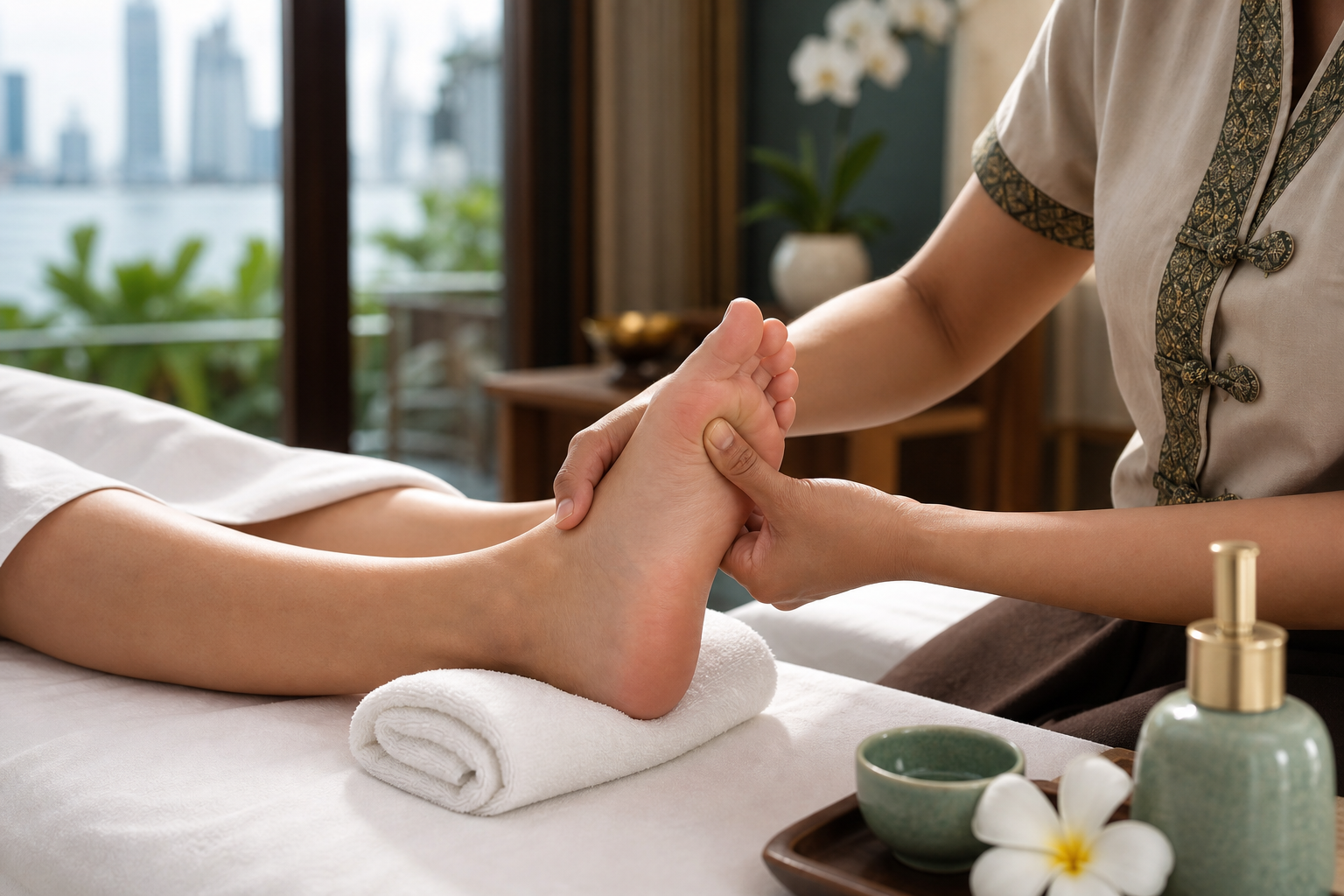
During foot reflexology, the practitioner may use thumb walking, palm compression, circular pressure, gentle toe mobilization, ankle support, and slow finishing strokes. If the pressure is within a comfortable range, the client receives repeated sensory information that is organized and non-threatening. The brain may begin to predict the rhythm. Breathing may slow. Muscle guarding may reduce. Attention may shift from pain worry to body sensation. These changes can all matter for people who carry tension in the shoulders, jaw, lower back, hips, calves, or abdomen.
Pain also has an emotional load. People often experience pain more intensely when they feel unsafe, rushed, unheard, or exhausted. A professional reflexology session can address this environment without pretending to treat the medical cause. The client is supported, asked for feedback, and given time. Touch is predictable. Pressure is adjustable. The session gives the nervous system a chance to move from alert mode toward rest mode. For some people, that shift is enough to reduce the felt intensity of discomfort.
This is especially relevant for broad, stress-linked body pain: neck tension after long computer work, tired legs, general soreness after travel, non-acute foot fatigue, and diffuse muscular tightness. It is less appropriate for unexplained severe pain, new neurological symptoms, sudden swelling, fever, trauma, chest pain, or pain that is progressive and undiagnosed. Reflexology can support comfort; it should not blur medical warning signs.
The Autonomic Nervous System: Stress, Guarding, and Whole-Body Relief
Another useful mechanism is autonomic regulation. The autonomic nervous system helps manage heart rate, breathing, digestion, sweating, alertness, and recovery. When a person is stressed or in pain, the body may lean toward protective arousal: shallow breathing, tighter muscles, restless attention, and higher sensitivity to signals from the body. When a person feels safe, the system may shift toward recovery: slower breathing, softer muscle tone, and better tolerance of sensation.
Foot reflexology is often delivered in a way that supports this shift. The client lies down or sits with the leg supported. The room is quiet. The therapist works slowly. The feet are held with steady contact. The sequence has a beginning, middle, and end. These features are not secondary decoration. They are part of the therapeutic effect because they change the context in which the nervous system interprets sensation.
In practical terms, this is why a person may book footwork for tired feet and leave saying the whole body feels lighter. The foot pressure may be local, but the regulation response is body-wide. Neck muscles may soften because breathing slowed. Lower-back discomfort may feel less sharp because guarding reduced. Abdominal tension may ease because the person came out of alert mode. Sleepiness after a session may reflect the same downshift.
The article should not claim that reflexology activates one exact nerve switch that cures body pain. It can say something more credible: slow therapeutic footwork may help the body move into a calmer state, and that calmer state can reduce the intensity with which discomfort is experienced.
Foot Zones Often Used for Body Discomfort
Reflexology maps vary by school, but many share broad regions. The toes are commonly associated with head, face, sinus, and neck areas. The ball of the foot is often linked to the chest, upper back, shoulders, and respiratory zone. The arch is usually associated with digestion, the diaphragm line, and abdominal comfort. The inner edge of the foot is treated as a spine line, moving from cervical areas near the big toe toward lower-back and pelvic areas closer to the heel. The heel is often used for hip, pelvic, sciatic, and lower-body themes.
A professional session may use those zones as a reading path. For neck tension, the therapist may warm the whole foot, then spend more time around the toes, big-toe base, and inner border. For upper-back tension, the ball of the foot and shoulder map area may receive slower pressure. For lower-back discomfort, the inner arch, heel, ankle, and calf integration may become the focus. For stress-related digestive unease, the arch and solar-plexus style zones may be approached with gentler rhythm.
These patterns should be described as traditional working zones, not proven body-part controls. A therapist should never tell a client that a sore heel proves pelvic disease or that a tender arch proves an intestinal problem. Tenderness can come from footwear, standing, callus, plantar fascia load, dehydration, anxiety, pressure technique, or simple local sensitivity. The map can guide the hands; it should not become a diagnostic claim.
For readers comparing reflexology with professional spa-style footwork, a Bangkok example such as Loft Thai's foot massage and reflexology treatment shows how a service page can frame foot massage around relaxation and traditional technique without needing exaggerated medical promises. That is the kind of discreet service context that belongs in an educational article: relevant, natural, and not over-sold.
For visitors who prefer a foot massage at home or in their Bangkok hotel, NUAD APP is a practical booking route for premium in-room massage delivered by trained therapists. The on-demand wellness app allows clients to reserve a therapist for hotel-style care, with a broad menu of more than 60 treatments and service standards connected to a prestigious, award-winning spa environment. In Bangkok, several hundred therapists have been trained for the NUAD APP model, and the service works with leading five-star hotels for guests who want hotel-level comfort without presenting massage as medical diagnosis or disease treatment.
What a Safe Whole-Body Foot Reflexology Session Looks Like
A safe session starts before pressure begins. The practitioner asks why the client is seeking reflexology, where discomfort is located, how long symptoms have been present, what makes symptoms better or worse, and whether the symptoms have already been assessed. The therapist should also ask about diabetes, neuropathy, vascular disease, pregnancy, cancer treatment, blood-thinning medication, recent surgery, skin infection, foot ulcers, fractures, blood-clot risk, fever, and unexplained swelling.
Next comes foot inspection. The practitioner looks for wounds, redness, blisters, fungal changes, bruising, swelling, unusual temperature, color change, fragile skin, and signs that pressure should be avoided. This step should feel professional and respectful. It is not a diagnosis. It is basic safety.
The session then moves from broad contact to specific work. A good rhythm is warming strokes, gentle compressions, thumb walking, focused zone work, toe and ankle mobilization, lower-leg integration when appropriate, and a calm closing sequence. The therapist should ask about pressure early and adjust before the client has to endure discomfort. Most wellness sessions sit best around light to moderate pressure. Strong pressure is not automatically more therapeutic.
For whole-body discomfort, the practitioner can work globally rather than chasing every pain location. The whole foot is warmed first. Then the session can emphasize the spine line, diaphragm line, ball of the foot, arch, heel, and ankle. The client is invited to breathe normally. If the body starts guarding, clenching, sweating, or pulling away, pressure is reduced. The goal is a nervous-system shift, not a test of pain tolerance.
- Screen: clarify goals, medical history, symptom duration, medications, and red flags.
- Inspect: check skin, temperature, wounds, swelling, bruising, and sensitivity before pressure.
- Calibrate: use a 1 to 10 pressure scale and stay in a comfortable range.
- Map: use traditional zones as a guide, not as diagnosis.
- Close: finish with broad calming touch and aftercare advice.
Why Pressure Should Not Be Painful
Many clients have learned to associate effective bodywork with intensity. Reflexology does not need to be painful to be useful. In fact, excessive pressure can push the nervous system back toward threat mode. If the client holds the breath, tightens the jaw, pulls the foot away, or braces through the hips, the session is no longer calming the system. It is asking the body to defend itself.
Some areas may feel tender, especially through the arch, heel, ball of the foot, and around the toes. Tenderness should be met with slower contact, broader pressure, or a smaller amount of force. The therapist can return later after the area has warmed. Sharp, electric, burning, or bruising pain is different. That is a signal to stop or refer, not a sign that the reflex point is "working."
This point is medically important for people with neuropathy or diabetes. The CDC notes that nerve damage can reduce the ability to feel pain, heat, or cold in the feet, and small problems may become serious if they are not noticed early. Anyone with reduced sensation needs lighter pressure, no hard tools, careful inspection, and a low threshold for medical or podiatric advice.
Evidence Review: What Research Can and Cannot Say
The research base for reflexology is mixed. NCCIH summarizes reflexology with cautious language: pressure is applied to points on the feet or hands, and although those points are believed to correspond to other body parts, claims that reflexology causes healing in those body parts have not been proven. That is the baseline for a medical article.
Some reviews have found positive signals for fatigue, sleep, anxiety, and pain-related outcomes in selected populations. The DARE summary of a systematic review and meta-analysis on foot reflexology reported effects on fatigue, sleep, and pain, while also noting variability across studies. Another DARE review update concluded that the best clinical evidence does not convincingly demonstrate reflexology as an effective treatment for medical conditions. These two findings are not as contradictory as they first appear. A comfort intervention can show symptom signals in some settings while still lacking enough high-quality evidence to be called a medical treatment.
For whole-body pain, the right conclusion is balanced. Reflexology may help some people feel calmer, sleepier, less tense, or more comfortable. It may be useful as an adjunct when symptoms are mild, chronic, stable, or already being medically managed. It should not be sold as a cure for arthritis, neuropathy, fibromyalgia, sciatica, migraine, cancer pain, autoimmune disease, digestive disease, hormonal disorders, or organ dysfunction. Research quality, small sample sizes, blinding challenges, expectation effects, varied protocols, and different outcome measures all make strong claims difficult.
That limitation does not make reflexology useless. It makes honesty essential. The most trustworthy wording is: "may support relaxation and comfort," "may help some people manage perceived discomfort," and "should be used alongside appropriate care." Those phrases are less dramatic than cure language, but they are more credible and safer for readers.
Professional Screening Before Foot-Based Pain Work
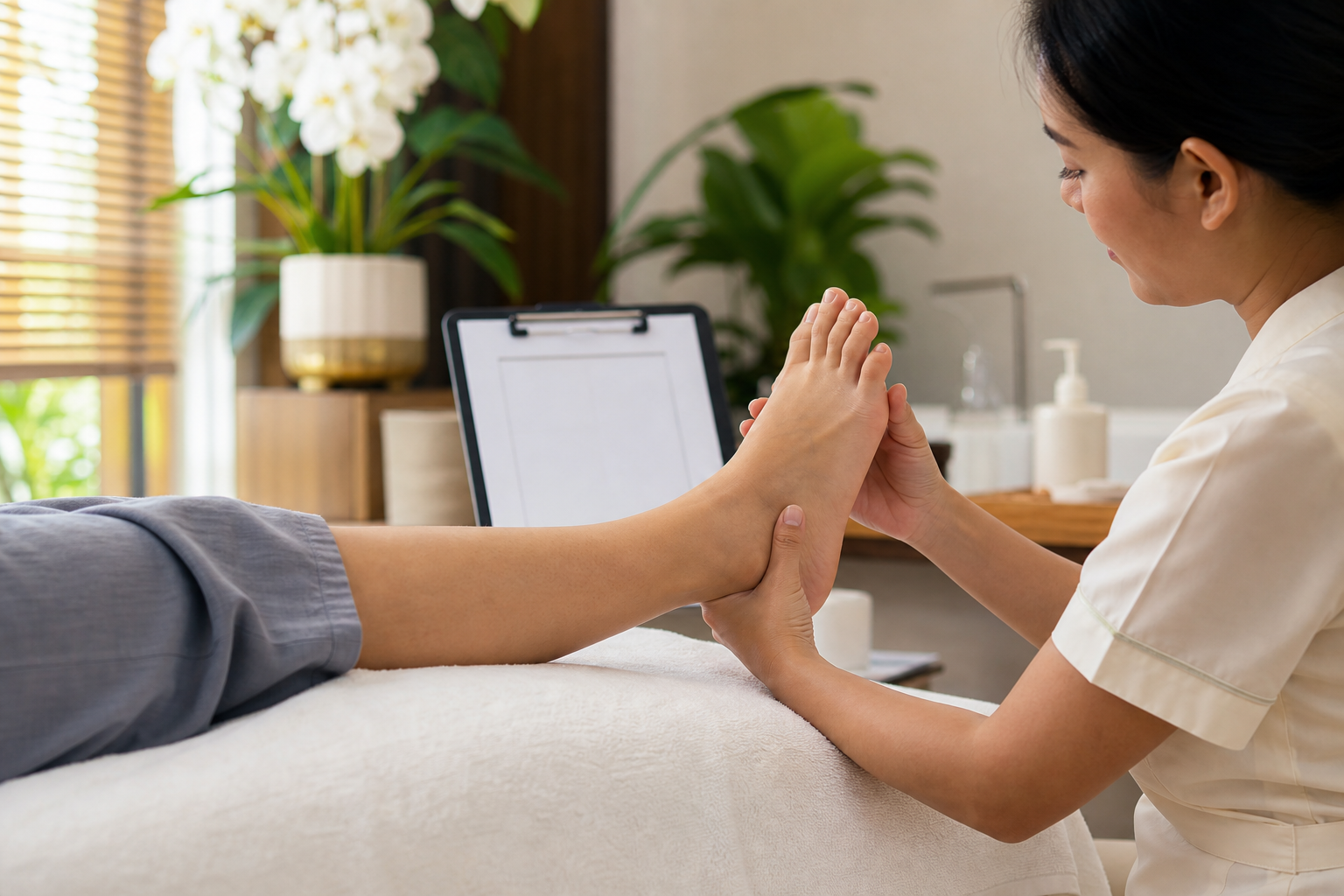
Photo note: this original editorial image was generated for Wiki Reflexology to illustrate professional screening and safe footwork. It is not a copied clinic photo and does not imply diagnosis.
Contraindications and Red Flags
Foot reflexology should be postponed or modified when the foot or the whole person is not appropriate for pressure. Avoid strong footwork over open wounds, ulcers, burns, active infection, acute injury, suspected fracture, severe unexplained pain, sudden swelling, skin that is hot and red, or areas with fragile bruised tissue. Do not use firm pressure when there is suspected blood clot risk, severe calf pain, recent surgery, or unexplained one-sided swelling.
Use extra caution with diabetes, neuropathy, peripheral artery disease, immune suppression, cancer treatment, pregnancy, anticoagulant medication, varicose veins, lymphedema, chronic kidney disease, and older adults with fragile skin. These conditions do not always forbid touch, but they change the pressure plan. A lighter relaxation session may be appropriate when a strong reflexology protocol is not.
Some symptoms require medical care rather than reflexology. These include chest pain, shortness of breath, fainting, sudden weakness, new numbness, severe headache, fever, spreading redness, non-healing wounds, sudden severe abdominal pain, unexplained weight loss, night pain, loss of bladder or bowel control, and pain after trauma. A foot session should never delay assessment for those signs.
A Gentle At-Home Routine for Body Discomfort
Self-reflexology should be simple and conservative. It is best used for general relaxation, mild tiredness, and non-urgent body tension. Wash and inspect the feet first. Sit comfortably with the ankle supported. Use a small amount of lotion only if the skin is intact and not slippery enough to make pressure uncontrolled. Avoid hard tools unless trained, and never use aggressive pressure on numb, bruised, swollen, wounded, or inflamed tissue.
Begin with one minute of broad palm strokes from heel to toes. Then use the thumb to make small walking movements through the arch, staying at a comfortable pressure. Spend one minute around the ball of the foot for upper-body map areas, one minute along the inner edge for the traditional spine line, and one minute around the heel for lower-back and hip map areas. Finish by holding the whole foot with both hands and taking five slow breaths.
The routine should feel soothing. Stop if symptoms are sharp, burning, electric, spreading, or unusual. Do not keep pressing a painful point in the hope of forcing relief. If body pain is persistent, progressive, or interfering with life, use reflexology only as a comfort tool while getting an appropriate assessment.
How Practitioners Can Explain the Body-Foot Connection
Practitioners need language that respects both tradition and evidence. A clear explanation might sound like this: "Reflexology uses traditional foot maps, but I do not use the foot to diagnose your organs. I use the map to organize the session, and I use pressure, rhythm, and feedback to help your body relax. If anything feels painful, sharp, or worrying, we will adjust or stop."
This phrasing is professional because it gives the client a real framework without making unsupported claims. It also protects the practitioner from drifting into medical diagnosis. Reflexology can be presented as a bodywork practice that may support relaxation, comfort, sleep readiness, and body awareness. It should not be presented as a replacement for a clinician.
Good documentation also matters. The practitioner should record the client's goal, relevant health history, foot observations, pressure level, zones emphasized, client feedback, aftercare advice, and any referral suggestion. When working with whole-body pain, notes should be especially clear about symptom boundaries. The session can support comfort, but it does not explain the cause of widespread pain.
Where Reflexology Fits in a Pain-Care Plan
Whole-body pain often needs more than one strategy. Sleep, movement, stress load, inflammation, mood, medication, physical therapy, ergonomic habits, medical conditions, and social support can all affect symptoms. Reflexology can sit inside that larger plan as a low-intensity, touch-based comfort practice. Its role is to create calm, support relaxation, and help the person reconnect with the body in a non-threatening way.
For chronic pain, NCCIH notes that some complementary approaches may help people manage certain painful conditions, while also emphasizing that safety depends on individual circumstances. That perspective fits reflexology well. The question is not, "Can foot pressure cure body pain?" The better question is, "Can a safe, well-delivered session help this person feel more comfortable without delaying appropriate care?"
When the answer is yes, reflexology can be valuable. It gives people a structured pause. It offers touch without athletic performance. It may support sleep and relaxation. It can be adapted to be gentle. It can be combined with breathing and body awareness. It can also be stopped immediately if it is not helping.
When the answer is no, a responsible practitioner steps back. New severe pain, neurological signs, swelling, wounds, infection, trauma, or unexplained systemic symptoms belong in medical care first. This boundary is not a weakness in reflexology. It is what makes reflexology safer and more credible.
Key Takeaways
- Foot reflexology may affect whole-body comfort indirectly through sensory input, relaxation, attention, breathing, and pain modulation.
- Traditional reflexology maps can organize a session, but they should not be used to diagnose organs or promise cures.
- The feet are neurologically rich, mechanically important structures, which helps explain why careful footwork can feel body-wide.
- Comfortable pressure is safer than painful pressure. Strong sensation is not proof of better results.
- Reflexology can complement care for mild or stable discomfort, but it should not replace medical assessment for severe, progressive, or unexplained symptoms.
- Diabetes, neuropathy, wounds, vascular disease, pregnancy, anticoagulant use, recent surgery, and suspected clot risk require extra caution.
FAQ: Foot Reflexology and Whole-Body Pain
Can foot reflexology cure pain in another part of the body?
No. It should not be described as a cure. Foot reflexology may help some people feel calmer, less tense, or more comfortable, but pain causes still need appropriate assessment and treatment.
Why do people feel relief in the back, shoulders, or head after footwork?
Possible reasons include nervous-system calming, reduced muscle guarding, slower breathing, soothing sensory input, improved attention to the body, and expectation effects. Traditional reflex maps may help organize the work, but they do not prove direct organ repair.
Should reflexology points be painful?
No. Tenderness can occur, but pressure should remain tolerable. Sharp, burning, electric, bruising, or worsening pain means the pressure should stop or be reduced.
Is reflexology safe for diabetes or neuropathy?
It requires caution. Reduced sensation can make it harder to notice injury. People with diabetes, neuropathy, ulcers, poor circulation, or foot wounds should seek medical or podiatric guidance and avoid firm tools or aggressive pressure.
How often can someone use reflexology for general body discomfort?
For general wellness, a weekly or every-two-weeks rhythm is common. At home, short gentle routines are safer than intense daily pressure. Stop if soreness, bruising, swelling, numbness, or symptom flares appear.
What is the best pressure level?
Most people do best with light to moderate pressure, around 3 to 6 on a 10-point comfort scale. The client should be able to breathe normally and relax throughout the session.
When should body pain be checked medically instead of treated with reflexology?
Seek medical care for severe, sudden, one-sided, progressive, unexplained, neurological, fever-related, chest-related, traumatic, or swelling-related symptoms. Reflexology should not delay urgent care.
Scientific, Medical, Therapeutic, and Book References
Research and medical references
- NCCIH: Reflexology. Evidence and safety overview explaining reflexology as pressure applied to points on the feet or hands, with cautious language about unproven healing claims.
- NCCIH: Chronic Pain and Complementary Health Approaches. Complementary-care context for chronic pain, including safety and individual health circumstances.
- NCCIH: Massage Therapy: What You Need To Know. General massage evidence and safety framing for manual therapies.
- NCBI Bookshelf: Foot Fascia Anatomy. Anatomy of foot fascia, plantar support structures, blood supply, lymphatics, and nerves.
- NCBI Bookshelf: Effects of Foot Reflexology on Fatigue, Sleep and Pain. DARE summary of a systematic review and meta-analysis on fatigue, sleep, and pain outcomes.
- NCBI Bookshelf: Reflexology Systematic Review Update. DARE summary emphasizing that evidence does not convincingly prove reflexology as a treatment for medical conditions.
- CDC: Your Feet and Diabetes. Foot-care safety context for diabetes, neuropathy, daily inspection, and when to seek care.
Book references
- Ingham, E. Stories the Feet Can Tell Thru Reflexology. Historical reflexology reference.
- Byers, D. Better Health with Foot Reflexology. International Institute of Reflexology.
- Dougans, I. The Complete Illustrated Guide to Reflexology. Reflex map and practice reference.
- Marquardt, H. Reflexotherapy of the Feet. Professional reflex-zone therapy reference.
- Melzack, R. and Wall, P. The Challenge of Pain. Foundational pain-modulation context for gate-control thinking.